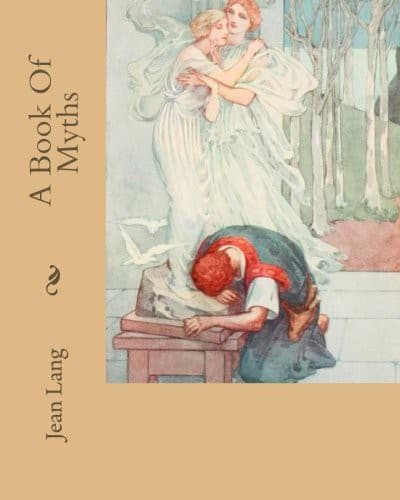
Mythology; Mythology, Greek -- Juvenile literature
At first it seemed as if Eva loved her dead sister's children as
though they were her own. But when she saw how passionate was her
husband's devotion to them, how he would have them to sleep near him
and would rise at their slightest whimper to comfort and to caress
them, and how at dawn she would wake to find he had left her side to
see that all was well with them, the poisonous weed of jealousy began
to grow up in the garden of her heart. She was a childless woman, and
she knew not whether it was her sister who had borne them whom she
hated, or whether she hated the children themselves. But steadily the
hatred grew, and the love that Bodb the Red bore for them only
embittered her the more. Many times in the year he would come to see
them, many times would take them away to stay with him, and each year
when the Dedannans held the Feast of Age--the feast of the great god
Mannanan, of which those who partook never grew old--the four children
of Lîr were present, and gave joy to all who beheld them by their
great beauty, their nobility, and their gentleness.
But as the love that all others gave to the four children of Lîr grew,
the hatred of Eva, their stepmother, kept pace with it, until at
length the poison in her heart ate into her body as well as her soul,
and she grew worn and ill out of her very wickedness. For nearly a
year she lay sick in bed, while the sound of the children's laughter
and their happy voices, their lovely faces like the faces of the
children of a god, and the proud and loving words with which their
father spoke of them were, to her, like acid in a festering wound. At
last there came a black day when jealousy had choked all the flowers
of goodness in her heart, and only treachery and merciless cruelty
remained. She rose from her couch and ordered the horses to be yoked
to her chariot that she might take the four children to the Great Lake
to see the king, her foster-father. They were but little children, yet
the instinct that sometimes tells even a very little child when it is
near an evil thing, warned Finola that harm would come to her and to
her brothers were they to go. It may also have been, perhaps, that she
had seen, with the sharp vision of a woman child, the thing to which
Lîr was quite blind, and that in a tone of her stepmother's voice, in
a look she had surprised in her eyes, she had learned that the love
that her father's wife professed for her and for the others was only
hatred, cunningly disguised. Thus she tried to make excuses for
herself and the little brothers to whom she was a child-mother, so
that they need not go. But Eva listened with deaf ears, and the
children said farewell to Lîr, who must have wondered at the tears
that stood in Finola's eyes and the shadow that darkened their blue,
and drove off in the chariot with their stepmother.
Public-domain text, read in full here on John Shaqi.
Reviews
Reviews
No reviews yet
Be the first to share your thoughts on this work.
Elsewhere in the archive
Join the Discussion
Join the discussion
Sign in to leave a comment or review.
Sign InorCreate an account