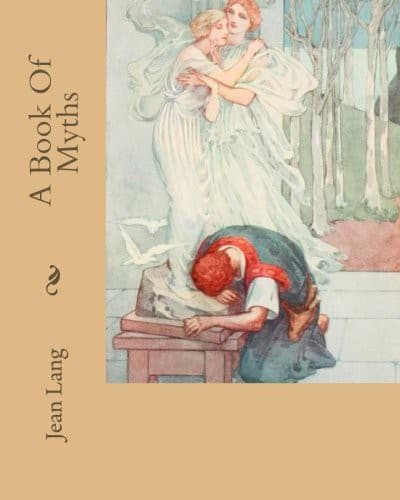
Mythology; Mythology, Greek -- Juvenile literature
"Puny one!" he said, "and puny are thy wishes! Because thou didst by
thy foolish wooing send the beautiful Eurydice swiftly down to the
Shades and break the heart of Orpheus, whose music is the music of the
Immortals, the bees that thou hast treasured have left their hives
empty and silent. So little are the bees! so great, O Aristæus, the
bliss or woe of Orpheus and Eurydice! Yet, because by guile thou hast
won the power to gain from me the knowledge that thou dost seek,
hearken to me now, Aristæus! Four bulls must thou find--four cows of
equal beauty. Then must thou build in a leafy grove four altars, and
to Orpheus and Eurydice pay such funeral honours as may allay their
resentment. At the end of nine days, when thou hast fulfilled thy
pious task, return and see what the gods have sent thee."
"This will I do most faithfully, O Proteus," said Aristæus, and
gravely loosened the chains and returned to where his mother awaited
him, and thence travelled to his own sunny land of Greece.
Most faithfully, as he had said, did Aristæus perform his vow. And
when, on the ninth day, he returned to the grove of sacrifice, a sound
greeted him which made his heart stop and then go on beating and
throbbing as the heart of a man who has striven valiantly in a great
fight and to whom the battle is assured.
For, from the carcase of one of the animals offered for sacrifice, and
whose clean white bones now gleamed in the rays of the sun that forced
its way through the thick shade of the grove of grey olives, there
came the "murmuring of innumerable bees."
"Out of the eater came forth meat, out of the strong came forth
sweetness."
And Aristæus, a Samson of the old Greek days, rejoiced exceedingly,
knowing that his thoughtless sin was pardoned, and that for evermore
to him belonged the pride of giving to all men the power of taming
bees, the glory of mastering the little brown creatures that pillage
from the fragrant, bright-hued flowers their most precious treasure.
PROSERPINE
"Sacred Goddess, Mother Earth,
Thou from whose immortal bosom,
Gods, and men, and beasts have birth,
Leaf and blade, and bud and blossom,
Breathe thine influence most divine
On thine own child, Proserpine.
If with mists of evening dew
Thou dost nourish those young flowers
Till they grow, in scent and hue,
Fairest children of the hours,
Breathe thine influence most divine
On thine own child, Proserpine."
Shelley.
The story of Persephone--of Proserpine--is a story of spring. When the
sun is warming the bare brown earth, and the pale primroses look up
through the snowy blackthorns at a kind, blue sky, almost can we hear
the soft wind murmur a name as it gently sways the daffodils and
breathes through the honey sweetness of the gold-powdered catkins on
the grey willows by the river--"Persephone! Persephone!"
Public-domain text, read in full here on John Shaqi.
Reviews
Reviews
No reviews yet
Be the first to share your thoughts on this work.
Elsewhere in the archive
Join the Discussion
Join the discussion
Sign in to leave a comment or review.
Sign InorCreate an account