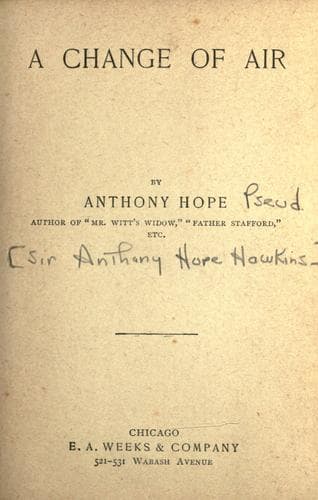
Country homes -- Fiction; England -- Social life and customs -- 19th century -- Fiction; Fame -- Fiction; Poets -- Fiction
He could not and did not for a moment blame Mrs. Hodge for her action.
It was the natural outcome of her love, and she had performed her
difficult task, as it seemed to him, with a perfect observance of all
the essential marks of good breeding, however homely her method had
been. But she could not understand even his love for Janet, much less
another feeling in him, which aided to make her intercession vain. For
he did not deny now that, besides the joy he had in Janet as a woman
merely, there was also the satisfaction he derived from the fact that
she was Miss Delane of Dirkham Grange. Fools and would-be cynics might
dismiss this as snobbery; but Dale told himself that he was right and
wise in clinging to the place in this new world which his sojourn at
Denborough had opened to him, and which a marriage with Janet would
secure for him in perpetuity. Setting aside altogether questions of
sentiment, he felt it useless not to recognize that, if he married
Nellie Fane, he would drift back into his old world, the gates would
close again, and the fresh realms of life and experience, which had
delighted his taste and stimulated his genius, would be his to wander
in no more. He had grown to love this world, this old world so new to
him; and he loved Janet not least because all about her, her face, her
speech, her motions, her every air, were redolent to him of its assured
distinction and unboastful pride. Nay, even these fantastic scruples
of hers were but a distortion of a noble instinct born in her blood,
and witnessed to a nature and qualities that he could look for only
in the shade of some such place as Dirkham Grange. He felt as if he
too belonged to her race, and had been all his life an exile from his
native land, whither at last a happy chance had led back his wandering
feet. What would dear old Mother Hodge understand of all that? What
even would Nellie herself, for all her ready sympathies? It was a
feeling that, not vulgar in itself, seemed to become vulgar in the
telling; and, after all, he had no need of other justification than his
love and his pledged word.
He looked out of the window and saw Arthur Angell walking moodily up
and down. Putting on his hat, he joined him, passing his arm through
his. Arthur turned to him with a petulant look.
"A lot of miserables we are, old boy," said Dale, pressing the arm he
held. "I am often tempted to regret, Arthur, that the state has not
charged itself with the control of marriages. It would relieve us all
of a large amount of trouble, and I really don't see that it would hurt
anyone except novelists. I am feeling badly in need of a benevolent
despotism."
"I'm going back to town," Arthur announced abruptly.
"I'm very sorry. But I don't know that it's any use asking you to stay.
Nellie goes to the Smiths' in a day or two----"
"It makes no difference to me where she goes," interrupted the unhappy
young man. "I--I mean----"
"I know what you mean."
Public-domain text, read in full here on John Shaqi.
Reviews
Reviews
No reviews yet
Be the first to share your thoughts on this work.
Elsewhere in the archive
Join the Discussion
Join the discussion
Sign in to leave a comment or review.
Sign InorCreate an account