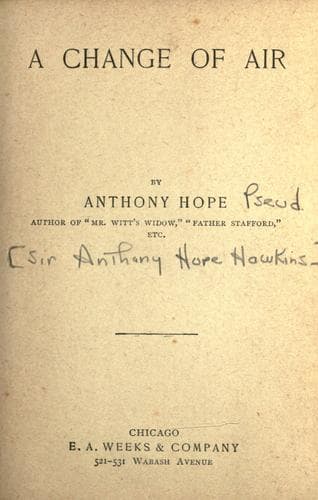
Country homes -- Fiction; England -- Social life and customs -- 19th century -- Fiction; Fame -- Fiction; Poets -- Fiction
Having got rid of the Mayor, Dale did not hasten to return to Arthur
Angell. At this moment, exasperated as he was, everything about his
friend annoyed him--his devotion, his unselfishness, his readiness to
accept defeat himself, his indiscreet zeal on behalf of his mistress.
His despair for himself, and his exhortation to Dale, joined in
manifesting that he neither possessed himself nor could understand in
another what a real passion was. If he did or could, he would never
have used that word "fancy." How could people speak of friendship or
gratitude, or both together, as if they were, or were in themselves
likely to lead to, love? You did not love a woman because you esteemed
her. If you loved her, you might esteem her--or you might not; anyhow,
you worshiped her. Yet these peddling Denborough folk were mapping out
his course for him. And Arthur Angell croaked about broken hearts.
Suddenly a happy thought struck him, a thought which went far to
restore his equanimity. These people, even that excellent Arthur, spoke
in ignorance. At the most, they--those who knew anything--supposed that
he had a "fancy" for Janet. They had no idea that his love had been
offered and accepted, that he was plighted to her by all the bonds of
honor and fidelity. This exacting gratitude they harped upon might
demand a change of nascent inclinations; it would not require, nor even
justify, broken promises, and the flinging back of what a man had asked
for and received. Dale's step grew more elastic and his face brighter
as he realized that, in reality, on a sane view of the position, duty
and pleasure went hand in hand, both pointing to the desired goal,
uniting to free him from any such self-sacrifice as Arthur Angell had
indicated. If Arthur were right about Nellie's feelings, and if he had
been a free man, he might have felt some obligation on him, or at least
have chosen, to make the child happy, but as it was----
"I must be just before I'm generous," he said to himself, and added,
with a shamefaced laugh, "and I happen to like justice best."
At this moment a servant in the Grange livery rode up, touching his
hat, and handed him a note. It was from Janet, though her writing was
so tremulous as to be scarcely recognizable. He tore it open and read:
You can never wish to see me again, but come once more. It was not
quite as bad as it seemed.
J.
In bewilderment he turned to the man.
"Miss Delane sent this?"
"Yes, sir."
"Say I'll come over to the Grange to-morrow morning."
The man rode off, and Dale stood, fingering and staring at his note.
"What does the dear girl mean?" he asked. "What wasn't so bad? Why
don't I wish to see her again? Has that ruffian driven her out of her
senses?"
When Dr. Spink came that evening, Dale seized the opportunity of
sounding him. The Doctor laughed at the idea of any serious mental
derangement.
"Miss Delane's very much upset, of course, very much, but her mind is
as right as yours or mine."
Public-domain text, read in full here on John Shaqi.
Reviews
Reviews
No reviews yet
Be the first to share your thoughts on this work.
Elsewhere in the archive
Join the Discussion
Join the discussion
Sign in to leave a comment or review.
Sign InorCreate an account