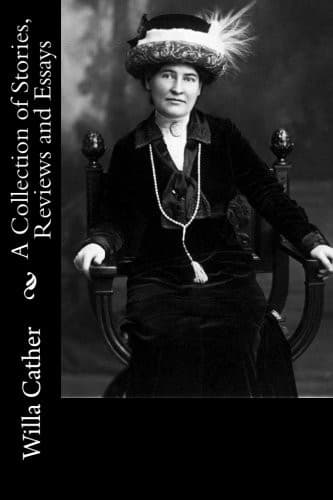
A Collection of Stories, Reviews and EssaysCather, Willa
General
A Collection of Stories, Reviews and Essays
Cather, Willa
Essays; Short stories; United States -- Social life and customs -- Fiction
When O'Mally first sat down at a desk to be an editor, all the cards
that were brought in looked pretty much alike to him. Ardessa was at
his elbow. She had long been steeped in literary distinctions and in
the social distinctions which used to count for much more than they
do now. She knew all the great men, all the nephews and clients of
great men. She knew which must be seen, which must be made welcome,
and which could safely be sent away. She could give O'Mally on the
instant the former rating in magazine offices of nearly every name
that was brought in to him. She could give him an idea of the man's
connections, of the price his work commanded, and insinuate whether
he ought to be met with the old punctiliousness or with the new
joviality. She was useful in explaining to her employer the
significance of various invitations, and the standing of clubs and
associations. At first she was virtually the social mentor of the
bullet-headed young Westerner who wanted to break into everything,
the solitary person about the office of the humming new magazine who
knew anything about the editorial traditions of the eighties and
nineties which, antiquated as they now were, gave an editor, as
O'Mally said, a background.
Despite her indolence, Ardessa was useful to O'Mally as a social
reminder. She was the card catalogue of his ever-changing personal
relations. O'Mally went in for everything and got tired of
everything; that was why he made a good editor. After he was through
with people, Ardessa was very skilful in covering his retreat. She
read and answered the letters of admirers who had begun to bore him.
When great authors, who had been dined and fêted the month before,
were suddenly left to cool their heels in the reception-room, thrown
upon the suave hospitality of the grand old man at the desk, it was
Ardessa who went out and made soothing and plausible explanations as
to why the editor could not see them. She was the brake that checked
the too-eager neophyte, the emollient that eased the severing of
relationships, the gentle extinguisher of the lights that failed.
When there were no longer messages of hope and cheer to be sent to
ardent young writers and reformers, Ardessa delivered, as sweetly as
possible, whatever messages were left.
Public-domain text, read in full here on John Shaqi.
Reviews
Reviews
No reviews yet
Be the first to share your thoughts on this work.
Elsewhere in the archive
Join the Discussion
Join the discussion
Sign in to leave a comment or review.
Sign InorCreate an account