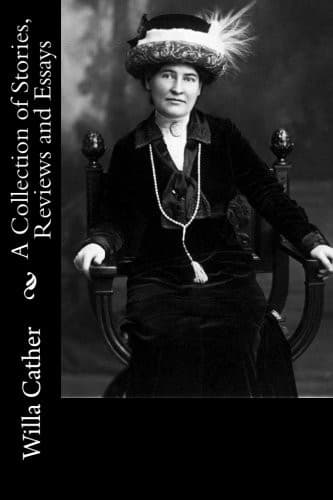
A Collection of Stories, Reviews and EssaysCather, Willa
General
A Collection of Stories, Reviews and Essays
Cather, Willa
Essays; Short stories; United States -- Social life and customs -- Fiction
While he read his mail, he often looked out and wondered why he had
been so long indifferent to that extraordinary scene of human
activity and hopefulness. How had a short-lived race of beings the
energy and courage valiantly to begin enterprises which they could
follow for only a few years; to throw up towers and build
sea-monsters and found great businesses, when the frailest of the
materials with which they worked, the paper upon which they wrote,
the ink upon their pens, had more permanence in this world than
they? All this material rubbish lasted. The linen clothing and
cosmetics of the Egyptians had lasted. It was only the human flame
that certainly, certainly went out. Other things had a fighting
chance; they might meet with mishap and be destroyed, they might
not. But the human creature who gathered and shaped and hoarded and
foolishly loved these things, he had no chance--absolutely none.
Wanning's cane, his hat, his topcoat, might go from beggar to beggar
and knock about in this world for another fifty years or so; but not
he.
In the late afternoon he never hurried to leave his office now.
Wonderful sunsets burned over the North River, wonderful stars
trembled up among the towers; more wonderful than anything he could
hurry away to. One of his windows looked directly down upon the
spire of Old Trinity, with the green churchyard and the pale
sycamores far below. Wanning often dropped into the church when he
was going out to lunch; not because he was trying to make his peace
with Heaven, but because the church was old and restful and
familiar, because it and its gravestones had sat in the same place
for a long while. He bought flowers from the street boys and kept
them on his desk, which his partners thought strange behavior, and
which Miss Doane considered a sign that he was failing.
But there were graver things than bouquets for Miss Doane and the
senior partner to ponder over.
The senior partner, McQuiston, in spite of his silvery hair and
mustache and his important church connections, had rich natural
taste for scandal.--After Mr. Wade went away for his vacation, in
May, Wanning took Annie Wooley out of the copying room, put her at a
desk in his private office, and raised her pay to eighteen dollars a
week, explaining to McQuiston that for the summer months he would
need a secretary. This explanation satisfied neither McQuiston nor
Miss Doane.
Annie was also paid for overtime, and although Wanning attended to
very little of the office business now, there was a great deal of
overtime. Miss Doane was, of course, 'above' questioning a chit like
Annie; but what was he doing with his time and his new secretary,
she wanted to know?
Public-domain text, read in full here on John Shaqi.
Reviews
Reviews
No reviews yet
Be the first to share your thoughts on this work.
Elsewhere in the archive
Join the Discussion
Join the discussion
Sign in to leave a comment or review.
Sign InorCreate an account