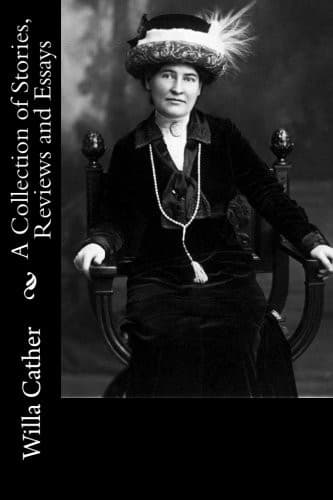
A Collection of Stories, Reviews and EssaysCather, Willa
General
A Collection of Stories, Reviews and Essays
Cather, Willa
Essays; Short stories; United States -- Social life and customs -- Fiction
Mr. Clemens asks what the French sensualists can possibly teach the
great American people about novel writing or morality? Well, it
would not seriously hurt the art of the classic author of "Puddin'
Head Wilson" to study Daudet, De Maupassant, Hugo and George Sand,
whatever it might do to his morals. Mark Twain is a humorist of a
kind. His humor is always rather broad, so broad that the polite
world can justly call it coarse. He is not a reader nor a thinker
nor a man who loves art of any kind. He is a clever Yankee who has
made a "good thing" out of writing. He has been published in the
North American Review and in the Century, but he is not and never
will be a part of literature. The association and companionship of
cultured men has given Mark Twain a sort of professional veneer, but
it could not give him fine instincts or nice discriminations or
elevated tastes. His works are pure and suitable for children, just
as the work of most shallow and mediocre fellows. House dogs and
donkeys make the most harmless and chaste companions for young
innocence in the world. Mark Twain's humor is of the kind that
teamsters use in bantering with each other, and his laugh is the
gruff "haw-haw" of the backwoodsman. He is still the rough, awkward,
good-natured boy who swore at the deck hands on the river steamer
and chewed uncured tobacco when he was three years old. Thoroughly
likeable as a good fellow, but impossible as a man of letters. It is
an unfortunate feature of American literature that a hostler with
some natural cleverness and a great deal of assertion receives the
same recognition as a standard American author that a man like
Lowell does. The French academy is a good thing after all. It at
least divides the sheep from the goats and gives a sheep the
consolation of knowing that he is a sheep.
It is rather a pity that Paul Bourget should have written "Outre
Mer," thoroughly creditable book though it is. Mr. Bourget is a
novelist, and he should not content himself with being an essayist,
there are far too many of them in the world already. He can develop
strong characters, invent strong situations, he can write the truth
and he should not drift into penning opinions and platitudes. When
God has made a man a creator, it is a great mistake for him to turn
critic. It is rather an insult to God and certainly a very great
wrong to man.
_Nebraska State Journal_, May 5, 1895
Public-domain text, read in full here on John Shaqi.
Reviews
Reviews
No reviews yet
Be the first to share your thoughts on this work.
Elsewhere in the archive
Join the Discussion
Join the discussion
Sign in to leave a comment or review.
Sign InorCreate an account