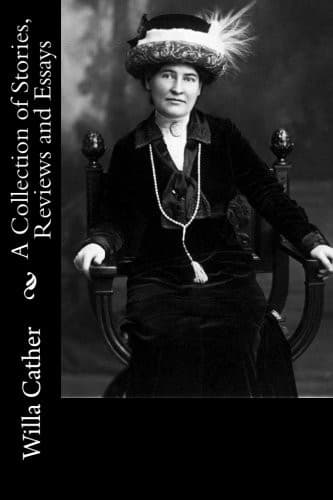
A Collection of Stories, Reviews and EssaysCather, Willa
General
A Collection of Stories, Reviews and Essays
Cather, Willa
Essays; Short stories; United States -- Social life and customs -- Fiction
A Creole "Bovary" is this little novel of Miss Chopin's. Not that
the heroine is a creole exactly, or that Miss Chopin is a
Flaubert--save the mark!--but the theme is similar to that which
occupied Flaubert. There was, indeed, no need that a second "Madame
Bovary" should be written, but an author's choice of themes is
frequently as inexplicable as his choice of a wife. It is governed
by some innate temperamental bias that cannot be diagrammed. This is
particularly so in women who write, and I shall not attempt to say
why Miss Chopin has devoted so exquisite and sensitive,
well-governed a style to so trite and sordid a theme. She writes
much better than it is ever given to most people to write, and hers
is a genuinely literary style; of no great elegance or solidity; but
light, flexible, subtle and capable of producing telling effects
directly and simply. The story she has to tell in the present
instance is new neither in matter nor treatment. "Edna Pontellier,"
a Kentucky girl, who, like "Emma Bovary," had been in love with
innumerable dream heroes before she was out of short skirts, married
"Leonce Pontellier" as a sort of reaction from a vague and visionary
passion for a tragedian whose unresponsive picture she used to kiss.
She acquired the habit of liking her husband in time, and even of
liking her children. Though we are not justified in presuming that
she ever threw articles from her dressing table at them, as the
charming "Emma" had a winsome habit of doing, we are told that "she
would sometimes gather them passionately to her heart, she would
sometimes forget them." At a creole watering place, which is
admirably and deftly sketched by Miss Chopin, "Edna" met "Robert
Lebrun," son of the landlady, who dreamed of a fortune awaiting him
in Mexico while he occupied a petty clerical position in New
Orleans. "Robert" made it his business to be agreeable to his
mother's boarders, and "Edna," not being a creole, much against his
wish and will, took him seriously. "Robert" went to Mexico but found
that fortunes were no easier to make there than in New Orleans. He
returns and does not even call to pay his respects to her. She
encounters him at the home of a friend and takes him home with her.
She wheedles him into staying for dinner, and we are told she sent
the maid off "in search of some delicacy she had not thought of for
herself, and she recommended great care in the dripping of the
coffee and having the omelet done to a turn."
Public-domain text, read in full here on John Shaqi.
Reviews
Reviews
No reviews yet
Be the first to share your thoughts on this work.
Elsewhere in the archive
Join the Discussion
Join the discussion
Sign in to leave a comment or review.
Sign InorCreate an account