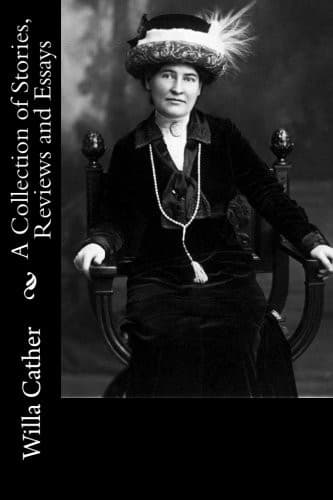
A Collection of Stories, Reviews and EssaysCather, Willa
General
A Collection of Stories, Reviews and Essays
Cather, Willa
Essays; Short stories; United States -- Social life and customs -- Fiction
The entire management of Mrs. Olaf's household devolved upon her
aunt, Johanna Vavrika, a superstitious, doting woman of fifty. When
Clara was a little girl her mother died, and Johanna's life had been
spent in ungrudging service to her niece. Clara, like many
self-willed and discontented persons, was really very apt, without
knowing it, to do as other people told her, and to let her destiny
be decided for her by intelligences much below her own. It was her
Aunt Johanna who had humored and spoiled her in her girlhood, who
had got her off to Chicago to study piano, and who had finally
persuaded her to marry Olaf Ericson as the best match she would be
likely to make in that part of the country. Johanna Vavrika had been
deeply scarred by smallpox in the old country. She was short and
fat, homely and jolly and sentimental. She was so broad, and took
such short steps when she walked, that her brother, Joe Vavrika,
always called her his duck. She adored her niece because of her
talent, because of her good looks and masterful ways, but most of
all because of her selfishness.
Clara's marriage with Olaf Ericson was Johanna's particular triumph.
She was inordinately proud of Olaf's position, and she found a
sufficiently exciting career in managing Clara's house, in keeping
it above the criticism of the Ericsons, in pampering Olaf to keep him
from finding fault with his wife, and in concealing from every one
Clara's domestic infelicities. While Clara slept of a morning,
Johanna Vavrika was bustling about, seeing that Olaf and the men had
their breakfast, and that the cleaning or the butter-making or the
washing was properly begun by the two girls in the kitchen. Then, at
about eight o'clock, she would take Clara's coffee up to her, and chat
with her while she drank it, telling her what was going on in the
house. Old Mrs. Ericson frequently said that her daughter-in-law would
not know what day of the week it was if Johanna did not tell her
every morning. Mrs. Ericson despised and pitied Johanna, but did not
wholly dislike her. The one thing she hated in her daughter-in-law
above everything else was the way in which Clara could come it over
people. It enraged her that the affairs of her son's big, barnlike
house went on as well as they did, and she used to feel that in this
world we have to wait over-long to see the guilty punished. "Suppose
Johanna Vavrika died or got sick?" the old lady used to say to Olaf.
"Your wife wouldn't know where to look for her own dish-cloth." Olaf
only shrugged his shoulders. The fact remained that Johanna did not
die, and, although Mrs. Ericson often told her she was looking
poorly, she was never ill. She seldom left the house, and she slept
in a little room off the kitchen. No Ericson, by night or day, could
come prying about there to find fault without her knowing it. Her
one weakness was that she was an incurable talker, and she sometimes
made trouble without meaning to.
Public-domain text, read in full here on John Shaqi.
Reviews
Reviews
No reviews yet
Be the first to share your thoughts on this work.
Elsewhere in the archive
Join the Discussion
Join the discussion
Sign in to leave a comment or review.
Sign InorCreate an account