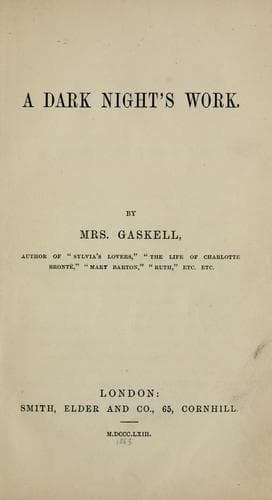
England -- Social life and customs -- 19th century -- Fiction
Ellinor could have told them both. They had _The Times_ lent to them on
the second day after publication by one of their friends in the Close,
and Ellinor, watching till Miss Monro's eyes were otherwise engaged,
always turned with trembling hands and a beating heart to the reports of
the various courts of law. In them she found--at first rarely--the name
she sought for, the name she dwelt upon, as if every letter were a study.
Mr. Losh and Mr. Duncombe appeared for the plaintiff, Mr. Smythe and Mr.
Corbet for the defendant. In a year or two that name appeared more
frequently, and generally took the precedence of the other, whatever it
might be; then on special occasions his speeches were reported at full
length, as if his words were accounted weighty; and by-and-by she saw
that he had been appointed a Queen's counsel. And this was all she ever
heard or saw about him; his once familiar name never passed her lips
except in hurried whispers to Dixon, when he came to stay with them.
Ellinor had had no idea when she parted from Mr. Corbet how total the
separation between them was henceforward to be, so much seemed left
unfinished, unexplained. It was so difficult, at first, to break herself
of the habit of constant mental reference to him; and for many a long
year she kept thinking that surely some kind fortune would bring them
together again, and all this heart-sickness and melancholy estrangement
from each other would then seem to both only as an ugly dream that had
passed away in the morning light.
Public-domain text, read in full here on John Shaqi.
Reviews
Reviews
No reviews yet
Be the first to share your thoughts on this work.
Elsewhere in the archive
Join the Discussion
Join the discussion
Sign in to leave a comment or review.
Sign InorCreate an account