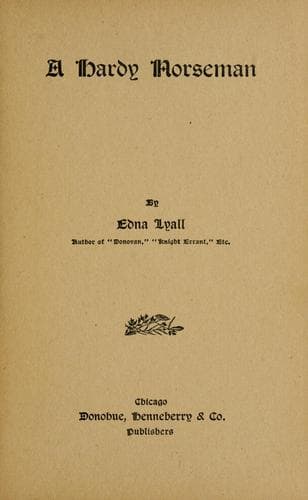
British -- Norway -- Fiction; Conduct of life -- Fiction; Norwegians -- England -- Fiction
“That is quite true,” she said. “The marriages brought about by scheming
relatives may look promising enough at first, but in the long run they
always bring trouble and misery. The true marriages are made in heaven,
Sigrid, though folks are slow to believe that.”
Sigrid went away comforted, yet nevertheless life was not very pleasant
to her just then, for although she had the satisfaction of seeing
Torvald walking the streets of Bergen without any signs of great
dejection in his face, she had all day long to endure the consciousness
of her aunt’s vexation, and to feel in every little economy that this
need not have been practiced had she decided as Fru Grönvold wished. It
was on the whole a very dreary Christmas, yet the sadness was brightened
by one little act of kindness and courtesy which to the end of her life
she never forgot. For after all it is that which is rare that makes a
deep impression on us. The word of praise spoken at the beginning of our
career lingers forever in our hearts with something of the glow of
encouragement and hopefulness which it first kindled there; while the
applause of later years glides off us like water off a duck’s back. The
little bit of kindness shown in days of trouble is remembered when
greater kindness during days of prosperity has been forgotten.
It was Christmas-eve. Sigrid sat in her cold bedroom, wrapped round in
an eider-down quilt. She was reading over again the letter she had last
received from Frithiof, just one of those short unsatisfying letters
which of late he had sent her. From Germany he had written amusingly
enough, but these London letters often left her more unhappy than they
found her, not so much from anything they said as from what they left
unsaid. Since last Christmas all had been taken away from her, and now
it seemed to her that even Frithiof’s love was growing cold, and her
tears fell fast on the thin little sheet of paper where she had tried so
hard to read love and hope between the lines, and had tried in vain.
A knock at the door made her dry her eyes hastily, and she was relieved
to find that it was not her Cousin Karen who entered, but Swanhild, with
a sunny face and blue eyes dancing with excitement.
“Look, Sigrid,” she cried, “here is a parcel which looks exactly like a
present. Do make haste and open it.”
They cut the string and folded back the paper, Sigrid giving a little
cry of surprise as she saw before her the water-color sketch of Bergen,
which had been her father’s last present to her on the day before his
death. Unable to pay for it, she had asked the proprietor of the shop to
take it back again, and had been relieved by his ready consent. Glancing
quickly at the accompanying note, she saw that it bore his signature. It
ran as follows:
Public-domain text, read in full here on John Shaqi.
Reviews
Reviews
No reviews yet
Be the first to share your thoughts on this work.
Elsewhere in the archive
Join the Discussion
Join the discussion
Sign in to leave a comment or review.
Sign InorCreate an account