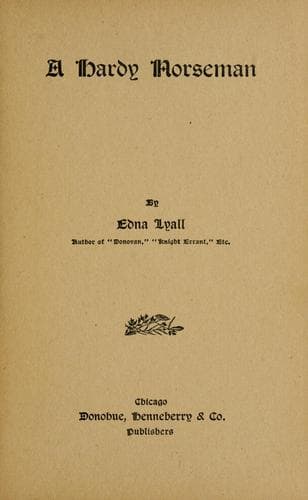
British -- Norway -- Fiction; Conduct of life -- Fiction; Norwegians -- England -- Fiction
From that time forward a great change came over his attitude toward her.
Hitherto his friendship with her had, it must be owned, been chiefly
selfish. He had always heartily liked her, had enjoyed being at Rowan
Tree House, had fallen into the habit of discussing many things with her
and valuing her opinion, but it was always of himself he had thought—of
what she could do for him, of what he could learn from her, of how much
enjoyment he could get from her music and her frank friendliness, and
her easy way of talking. It was not that he was more selfish than most
men, but that they had learned really to know each other at a time when
his heart was so paralyzed by Blanche’s faithlessness, so crushed by the
long series of misfortunes, that giving had been out of the question for
him; he could merely take and make the most of whatever she could give
him.
But now all this was altered. The old wounds, though to the end of his
life they must leave a scar, were really healed. He had lived through a
great deal, and had lived in a way that had developed the best points in
his character. He had now a growingly keen appreciation for all that was
really beautiful—for purity, and strength, and tenderness, and for that
quality which it is the fashion to call Altruism, but which he, with his
hatred of affectation in words, called goodness.
As he thought of Cecil during those days he began to see more and more
clearly the full force of her character. Hitherto he had quietly taken
her for granted; there was nothing very striking about her, nothing in
the least obtrusive. Perhaps if it had not been for that strange little
scene in the garden he would never have taken the trouble to think of
her actual character.
Through the week that followed he watched her with keen interest and
sympathy. That she should be in trouble—at any rate, in trouble that was
patent to all the world—was something entirely new. Their positions
seemed to be reversed; and he found himself spontaneously doing
everything he could think of to please and help her. Her trouble seemed
to draw them together; and to his mind there was something very
beautiful in her passionate devotion to the children—for it was a
devotion that never in the least bordered on sentimentality. She went
through everything very naturally, having a good cry now and then, but
taking care not to make the children unhappy at the prospect of the
parting, and arranging everything that they could possibly want, not
only on the voyage, but for some time to come in their new home.
“She is so plucky!” thought Frithiof to himself, with a thrill of
admiration. For he was not at all the sort of man to admire
helplessness, or languor, or cowardice; they seemed to him as unlovely
in a woman as in a man.
At last the actual parting came. Cecil would have liked to go down to
the steamer and see the children start, but on thinking it over she
decided that it would be better not.
Public-domain text, read in full here on John Shaqi.
Reviews
Reviews
No reviews yet
Be the first to share your thoughts on this work.
Elsewhere in the archive
Join the Discussion
Join the discussion
Sign in to leave a comment or review.
Sign InorCreate an account