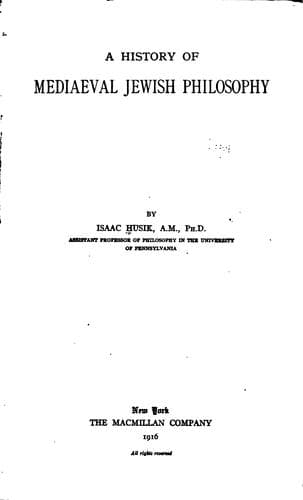
A History of Mediaeval Jewish PhilosophyHusik, Isaac
ReligionJewish
A History of Mediaeval Jewish Philosophy
Husik, Isaac
Philosophy, Jewish; Philosophy, Medieval
God created the world out of nothing, and not out of a pre-existent
matter. For if the matter of the world is eternal like God, there is no
more reason for supposing that God formed a world out of it than that it
formed a world out of God.
The world is perfect. For we have repeatedly shown that its creation is
due entirely to God's goodness. If then it were not perfect, this would
argue in God either ignorance or niggardliness or weakness.[175]
Most of the ancients avoided giving God attributes for fear of making
him the bearer of qualities, which would introduce plurality and
composition in his essence. The proper view, however, is this. As God's
essence is different from all other essences, so are his attributes
different from all other attributes. His attributes are not different
from him; his knowledge and his truth and his power are his essence. The
way man arrives at the divine attributes is this. Men have examined his
works and learned from them God's existence. They then reflected on this
existent and found that he was not weak; so they called him strong. They
found his works perfect, and they called him wise. They perceived that
he was self-sufficient, without need of anything, and hence without any
motives for doing wrong. Hence they called him righteous. And so on with
the other attributes. All this they did in order that people may learn
from him and imitate his ways. But we must not forget that all these
expressions of God's attributes are figurative. No one must suppose that
if we do not say he has life, it means he is dead. What we mean is that
we cannot apply the term living to God literally, in the sense in which
we apply it to other living things. When the Bible does speak of God as
alive and living, the meaning is that he exists forever. The philosopher
is right when he says that it is more proper to apply negative
attributes to God than positive.[176]
Public-domain text, read in full here on John Shaqi.
Reviews
Reviews
No reviews yet
Be the first to share your thoughts on this work.
Elsewhere in the archive
Join the Discussion
Join the discussion
Sign in to leave a comment or review.
Sign InorCreate an account