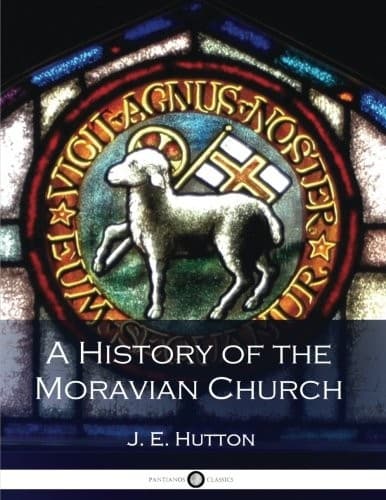
A History of the Moravian ChurchHutton, J. E. (Joseph Edmund)
Religion
A History of the Moravian Church
Hutton, J. E. (Joseph Edmund)
Moravian Church -- History
At this point, however, he acted like a fanatic, and manifested the
first symptoms of that weak trait in his character which nearly wrecked
his career. As he pondered one day on the state of affairs at Herrnhut,
it suddenly flashed upon his mind that the Brethren would do far better
without their ancient constitution. He first consulted the Elders and
Helpers {Jan. 7th, 1731.}; he then summoned the whole congregation; and
there and then he deliberately proposed that the Brethren should abolish
their regulations, abandon their constitution, cease to be Moravians and
become pure Lutherans. At that moment Zinzendorf was calmly attempting
to destroy the Moravian Church. He did not want to see that Church
revive. For some reason of his own, which he never explained in print,
he had come to the conclusion that the Brethren would serve Christ far
better without any special regulations of their own. But the Brethren
were not disposed to meek surrender. The question was keenly debated. At
length, however, both sides agreed to appeal to a strange tribunal. For
the first time in the history of Herrnhut a critical question of Church
policy was submitted to the Lot.[86] The Brethren took two slips of paper
and put them into a box. On the first were the words, "To them that are
without law, as without law, that I might gain them that are without
law," 1 Cor. ix. 21; on the second the words, "Therefore, Brethren,
stand fast, and hold the traditions which ye have been taught," 2 Thess.
ii. 15. At that moment the fate of the Church hung in the balance; the
question at issue was one of life and death; and the Brethren spent a
long time in anxious prayer. If the first slip of paper was drawn, the
Church would cease to exist; if the second, she might still live by the
blessing of God. Young Christel, Zinzendorf's son, now entered the room.
He drew the second slip of paper, and the Moravian Church was saved. To
Zinzendorf this was an event of momentous importance. As soon as
that second slip of paper was drawn, he felt convinced that God had
sanctioned the renewal of the Moravian Church.
Next year an event occurred to strengthen his convictions. A body of
commissioners from Dresden appeared at Herrnhut {Jan. 19-22, 1732.}.
They attended all the Sunday services, had private interviews with the
Brethren, and sent in their report to the Saxon Government. The Count's
conduct had excited public alarm. He had welcomed not only Moravians at
Herrnhut, but Schwenkfelders at Berthelsdorf; and, therefore, he was now
suspected of harbouring dangerous fanatics. For a long time the issue
hung doubtful; but finally the Government issued a decree that while the
Schwenkfelders must quit the land, the Moravians should be allowed to
stay as long as they behaved themselves quietly {April 4th, 1733.}.
Public-domain text, read in full here on John Shaqi.
Reviews
Reviews
No reviews yet
Be the first to share your thoughts on this work.
Elsewhere in the archive
Join the Discussion
Join the discussion
Sign in to leave a comment or review.
Sign InorCreate an account