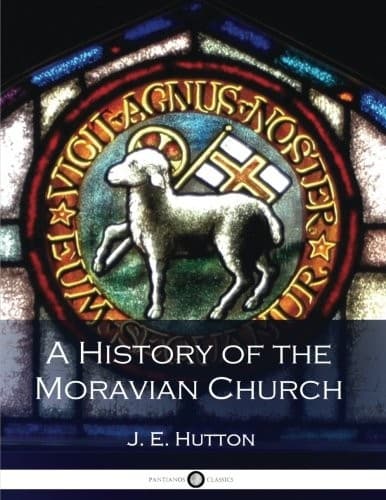
A History of the Moravian ChurchHutton, J. E. (Joseph Edmund)
Religion
A History of the Moravian Church
Hutton, J. E. (Joseph Edmund)
Moravian Church -- History
We pass on to other scenes, to Dutch Guinea or Surinam. As the Dutch
were still a great colonial power, they had plenty of opportunity to
spread the Gospel; and yet, except in India, they had hitherto not
lifted a finger in the cause of foreign missions. For the most part the
Dutch clergy took not the slightest interest in the subject. They held
bigoted views about predestination. They thought that Christ had died
for them, but not for Indians and negroes. As the Brethren, however,
were good workmen, it was thought that they might prove useful in the
Colonies; and so Bishop Spangenberg found it easy to make an arrangement
with the Dutch Trading Company, whereby the Brethren were granted a
free passage, full liberty in religion, and exemption from the oath and
military service {1734.}. But all this was little more than pious talk.
As soon as the Brethren set to work the Dutch pastors opposed them to
the teeth. At home and abroad it was just the same. At Amsterdam
the clergy met in Synod, and prepared a cutting "Pastoral Letter,"
condemning the Brethren's theology; and at Paramaribo the Brethren were
forbidden to hold any meetings at all. But the Brethren did not stay
very long in Paramaribo. Through three hundred miles of jungle and swamp
they pressed their way, and came to the homes of the Indian tribes; to
the Accawois, who earned their living as professional assassins; to the
Warrows, who wallowed in the marshes; to the Arawaks, or "Flour People,"
who prepared tapioca; to the Caribs, who sought them that had familiar
spirits and wizards that peep and mutter. "It seems very dark," they
wrote to the Count, "but we will testify of the grace of the Saviour
till He lets the light shine in this dark waste." For twenty years they
laboured among these Indian tribes; and Salomo Schumann, the leader of
the band, prepared an Indian dictionary and grammar. One story flashes
light upon their labours. As Christopher Dähne, who had built himself
a hut in the forest, was retiring to rest a snake suddenly glided down
upon him from the roof, bit him twice or thrice, and coiled itself round
his body. At that moment, the gallant herald of the Cross, with death
staring him in the face, thought, not of himself, but of the people whom
he had come to serve. If he died as he lay the rumour might spread that
some of the natives had killed him; and, therefore, he seized a piece
of chalk and wrote on the table, "A serpent has killed me." But lo! the
text flashed suddenly upon him: "They shall take up serpents; and if
they drink any deadly thing it shall not hurt them." He seized the
serpent, flung it from him, lay down to sleep in perfect peace, and next
morning went about his labours.
Public-domain text, read in full here on John Shaqi.
Reviews
Reviews
No reviews yet
Be the first to share your thoughts on this work.
Elsewhere in the archive
Join the Discussion
Join the discussion
Sign in to leave a comment or review.
Sign InorCreate an account