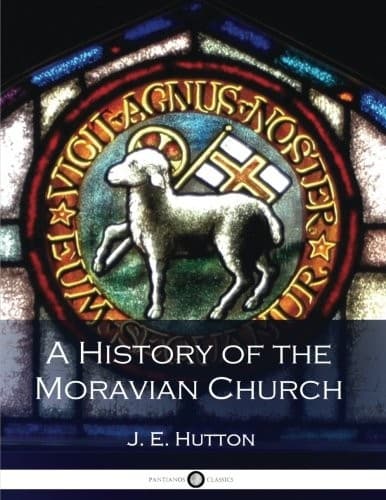
A History of the Moravian ChurchHutton, J. E. (Joseph Edmund)
Religion
A History of the Moravian Church
Hutton, J. E. (Joseph Edmund)
Moravian Church -- History
Again, this work of the Brethren was important because it was thorough
and systematic. At first the missionaries were compelled to go out with
very vague ideas of their duties. But in 1734 the Brethren published
"Instructions for the Colony in Georgia"; in 1737 "Instructions for
Missionaries to the East"; in 1738 "Instructions for all Missionaries";
and in 1740 "The Right Way to Convert the Heathen." Thus even during
those early years the Moravian missionaries were trained in missionary
work. They were told what Gospel to preach and how to preach it. "You
are not," said Zinzendorf, in his "Instructions," "to allow yourselves
to be blinded by the notion that the heathen must be taught first to
believe in God, and then afterwards in Jesus Christ. It is false. They
know already that there is a God. You must preach to them about the Son.
You must be like Paul, who knew nothing but Jesus and Him crucified. You
must speak constantly, in season, and out of season, of Jesus, the Lamb,
the Saviour; and you must tell them that the way to salvation is belief
in this Jesus, the Eternal Son of God." Instead of discussing doctrinal
questions the missionaries laid the whole stress on the person and
sacrifice of Christ. They avoided dogmatic language. They used the
language, not of the theological world, but of the Gospels. They
preached, not a theory of the Atonement, but the story of the Cross. "We
must," said Spangenberg, "hold to the fact that the blood and death of
Jesus are the diamond in the golden ring of the Gospel."
But alongside this Gospel message the Brethren introduced as far as
possible the stern system of moral discipline which already existed
at Herrnhut. They lived in daily personal touch with the people. They
taught them to be honest, obedient, industrious, and loyal to the
Government. They opened schools, taught reading and writing, and
instructed the girls in sewing and needlework. They divided their
congregations, not only into "Choirs," but also into "Classes." They
laid the stress, not on public preaching, but on the individual "cure of
souls." For this purpose they practised what was called "The Speaking."
At certain fixed seasons, i.e., the missionary, or one of his helpers,
had a private interview with each member of the congregation. The old
system of the Bohemian Brethren was here revived.[89] At these private
interviews there was no possibility of any moral danger. At the head of
the men was the missionary, at the head of the women his wife; for the
men there were male "Helpers," for the women female "Helpers"; and thus
all "speakings" took place between persons of the same sex only. There
were three degrees of discipline. For the first offence the punishment
was reproof; for the second, suspension from the Communion; for the
third, expulsion from the congregation. And thus the Brethren proved up
to the hilt that Christian work among the heathen was not mere waste of
time.
Public-domain text, read in full here on John Shaqi.
Reviews
Reviews
No reviews yet
Be the first to share your thoughts on this work.
Elsewhere in the archive
Join the Discussion
Join the discussion
Sign in to leave a comment or review.
Sign InorCreate an account