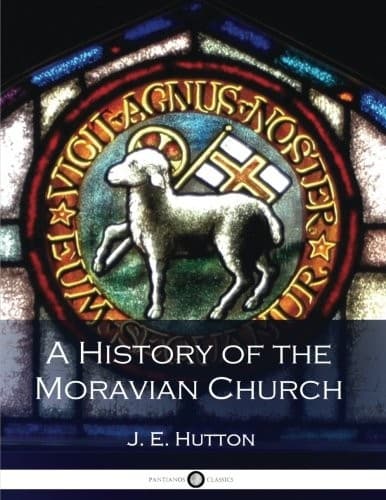
A History of the Moravian ChurchHutton, J. E. (Joseph Edmund)
Religion
A History of the Moravian Church
Hutton, J. E. (Joseph Edmund)
Moravian Church -- History
"Enough, father," said the Count; "we understand each other." And from
that moment the two were friends. The Count went to see him in his dirty
home, and ate black bread at his table. One morning, before dawn, as the
two walked out, the old patriarch opened his heart.
"My heart," said he, "is longing for the dawn. I am sick, yet know not
what is the matter with me. I am looking for something, yet know not
what I seek. I am like one who is chased, yet I see no enemy, except the
one within me, my old evil heart."
The Count opened his lips, and preached the Gospel of Christ. He painted
Love on the Cross. He described that Love coming down from holiness
and heaven. He told the old Jew, in burning words, how Christ had met
corrupted mankind, that man might become like God. As the old man wept
and wrung his hands, the two ascended a hill, whereon stood a lonely
church. And the sun rose, and its rays fell on the golden cross on the
church spire, and the cross glittered brightly in the light of heaven.
"See there, Abraham," said Zinzendorf, "a sign from heaven for you.
The God of your fathers has placed the cross in your sight, and now the
rising sun from on high has tinged it with heavenly splendour. Believe
on Him whose blood was shed by your fathers, that God's purpose of mercy
might be fulfilled, that you might be free from all sin, and find in Him
all your salvation."
"So be it," said the Jew, as a new light flashed on his soul. "Blessed
be the Lord who has had mercy upon me."
We have now to notice, step by step, how Zinzendorf, despite his
theories, restored the Moravian Church to vigorous life. His first move
was dramatic. As he strolled one day on the shore of the Baltic Sea, he
bethought him that the time had come to revive the Brethren's Episcopal
Orders in Germany. He wished to give his Brethren a legal standing.
In Saxony he had been condemned as a heretic; in Prussia he would be
recognized as orthodox; and to this intent he wrote to the King of
Prussia, Frederick William I., and asked to be examined in doctrine by
qualified Divines of the State Church. The King responded gladly. He had
been informed that the Count was a fool, and was, therefore, anxious to
see him; and now he sent him a messenger to say that he would be highly
pleased if Zinzendorf would come and dine with him at Wusterhausen.
"What did he say?" asked His Majesty of the messenger when that
functionary returned.
"Nothing," replied the messenger.
"Then," said the King, "he is no fool."
The Count arrived, and stayed three days. The first day the King was
cold; the second he was friendly; the third he was enthusiastic.
"The devil himself," he said to his courtiers, "could not have told
me more lies than I have been told about this Count. He is neither
a heretic nor a disturber of the peace. His only sin is that he, a
well-to-do Count, has devoted himself to the spread of the Gospel. I
will not believe another word against him. I will do all I can to help
him."
Public-domain text, read in full here on John Shaqi.
Reviews
Reviews
No reviews yet
Be the first to share your thoughts on this work.
Elsewhere in the archive
Join the Discussion
Join the discussion
Sign in to leave a comment or review.
Sign InorCreate an account