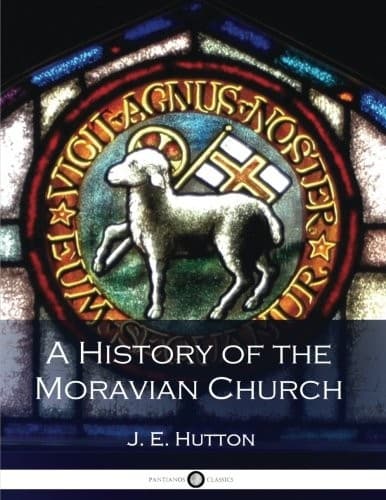
A History of the Moravian ChurchHutton, J. E. (Joseph Edmund)
Religion
A History of the Moravian Church
Hutton, J. E. (Joseph Edmund)
Moravian Church -- History
nature of God is revealed in all its glory to man in the Person of the
suffering Man Christ Jesus. He was a beautiful Christian poet; his
hymns are found to-day in every collection; his "Jesus, Thy blood and
righteousness" was translated into English by John Wesley; and his noble
"Jesus, still lead on!" is as popular in the cottage homes of Germany as
Newman's "Lead, kindly light" in England. Of the three great qualities
required in a poet, Zinzendorf, however, possessed only two. He had the
sensibility; he had the imagination; but he rarely had the patience to
take pains; and, therefore, nearly all his poetry is lacking in finish
and artistic beauty. He was an earnest social reformer; he endeavoured,
by means of his settlement system, to solve the social problem; and his
efforts to uplift the working classes were praised by the famous German
critic, Lessing. The historian and theologian, Albrecht Ritschl, has
accused him of sectarian motives and of wilfully creating a split in the
Lutheran Church. The accusation is absolutely false. There is nothing
more attractive in the character of Zinzendorf than his unselfish
devotion to one grand ideal. On one occasion, after preaching at Berlin,
he met a young lieutenant. The lieutenant was in spiritual trouble.
"Let me ask you," said Zinzendorf, "one question: Are you alone in your
religious troubles, or do you share them with others?"
The lieutenant replied that some friends and he were accustomed to pray
together.
"That is right," said Zinzendorf. "I acknowledge no Christianity without
fellowship."
Public-domain text, read in full here on John Shaqi.
Reviews
Reviews
No reviews yet
Be the first to share your thoughts on this work.
Elsewhere in the archive
Join the Discussion
Join the discussion
Sign in to leave a comment or review.
Sign InorCreate an account