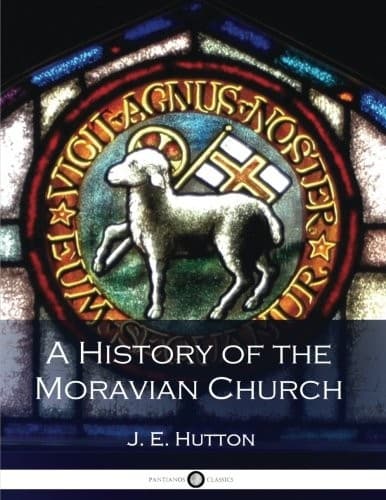
A History of the Moravian ChurchHutton, J. E. (Joseph Edmund)
Religion
A History of the Moravian Church
Hutton, J. E. (Joseph Edmund)
Moravian Church -- History
They called themselves Jednota Bratrska--i.e., the Church of the
Brethren. As this word "Jednota" means union, and is used in this sense
in Bohemia at the present day, it is possible that the reader may think
that instead of calling the Brethren a Church, we ought rather to call
them the Union or Unity of the Brethren. If he does, however, he will
be mistaken. We have no right to call the Brethren a mere Brotherhood
or Unity. They regarded themselves as a true apostolic Church. They
believed that their episcopal orders were valid. They called the Church
of Rome a Jednota;[24] they called the Lutheran Church a Jednota;[25] they
called themselves a Jednota; and, therefore, if the word Jednota means
Church when applied to Lutherans and Roman Catholics, it must also mean
Church when applied to the Bohemian Brethren. It is not correct to
call them the Unitas Fratrum. The term is misleading. It suggests a
Brotherhood rather than an organized Church. We have no right to call
them a sect; the term is a needless insult to their memory.[26] As the
Brethren settled in the Valley of Kunwald, the great object which they
set before them was to recall to vigorous life the true Catholic Church
of the Apostles; and as soon as they were challenged by their enemies to
justify their existence, they replied in good set terms.
"Above all things," declared the Brethren, at a Synod held in 1464, "we
are one in this purpose. We hold fast the faith of the Lord Christ. We
will abide in the righteousness and love of God. We will trust in the
living God. We will do good works. We will serve each other in the
spirit of love. We will lead a virtuous, humble, gentle, sober, patient
and pure life; and thereby shall we know that we hold the faith in
truth, and that a home is prepared for us in heaven. We will show
obedience to one another, as the Holy Scriptures command. We will take
from each other instruction, reproof and punishment, and thus shall we
keep the covenant established by God through the Lord Christ."[27] To
this purpose the Brethren held firm. In every detail of their lives--in
business, in pleasure, in civil duties--they took the Sermon on the
Mount as the lamp unto their feet. From the child to the old man, from
the serf to the lord, from the acoluth to the bishop, the same strict
law held good. What made the Brethren's Church shine so brightly in
Bohemia before Luther's days was not their doctrine, but their lives;
not their theory, but their practice; not their opinions, but their
discipline. Without that discipline they would have been a shell without
a kernel. It called forth the admiration of Calvin, and drove Luther to
despair. It was, in truth, the jewel of the Church, her charm against
foes within and without; and so great a part did it play in their lives
that in later years they were known to some as "Brethren of the Law of
Christ."
Public-domain text, read in full here on John Shaqi.
Reviews
Reviews
No reviews yet
Be the first to share your thoughts on this work.
Join the Discussion
Join the discussion
Sign in to leave a comment or review.
Sign InorCreate an account