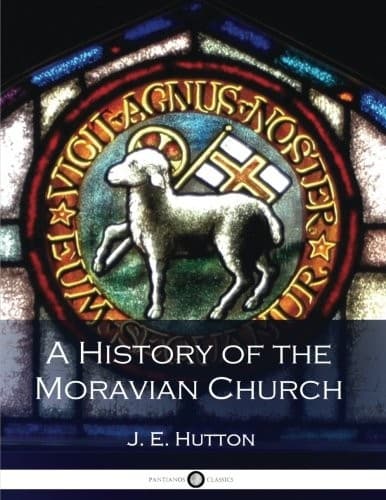
A History of the Moravian ChurchHutton, J. E. (Joseph Edmund)
Religion
A History of the Moravian Church
Hutton, J. E. (Joseph Edmund)
Moravian Church -- History
No portion of the Church was more carefully watched than the ministers.
As the chief object which the Brethren set before them was obedience
to the Law of Christ, it followed, as the night the day, that the
chief quality required in a minister was not theological learning,
but personal character. When a man came forward as a candidate for
the ministry he knew that he would have to stand a most searching
examination. His character and conduct were thoroughly sifted. He must
have a working knowledge of the Bible, a blameless record, and a
living faith in God. For classical learning the Brethren had an honest
contempt. It smacked too much of Rome and monkery. As long as the
candidate was a holy man, and could teach the people the plain truths of
the Christian faith, they felt that nothing more was required, and did
not expect him to know Greek and Hebrew. In vain Luther, in a friendly
letter, urged them to cultivate more knowledge. "We have no need," they
replied, "of teachers who understand other tongues, such as Greek and
Hebrew. It is not our custom to appoint ministers who have been trained
at advanced schools in languages and fine arts. We prefer Bohemians
and Germans who have come to a knowledge of the truth through personal
experience and practical service, and who are therefore qualified to
impart to others the piety they have first acquired themselves. And here
we are true to the law of God and the practice of the early Church."[28] Instead of regarding learning as an aid to faith, they regarded it as
an hindrance and a snare. It led, they declared, to wordy battles, to
quarrels, to splits, to uncertainties, to doubts, to corruptions. As
long, they said, as the ministers of the Church of Christ were simple
and unlettered men, so long was the Church a united body of believers;
but as soon as the parsons began to be scholars, all sorts of evils
arose. What good, they argued, had learning done in the past? It had
caused the translation of the Bible into Latin, and had thus hidden
its truths from the common people. "And therefore," they insisted, "we
despise the learning of tongues."
Public-domain text, read in full here on John Shaqi.
Reviews
Reviews
No reviews yet
Be the first to share your thoughts on this work.
Elsewhere in the archive
Join the Discussion
Join the discussion
Sign in to leave a comment or review.
Sign InorCreate an account