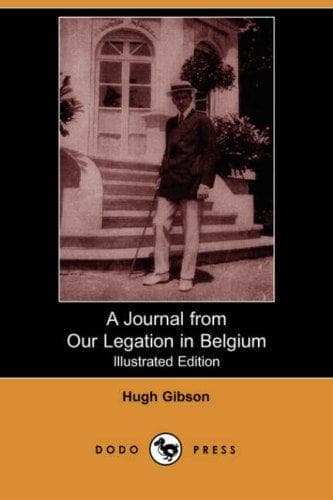
A Journal From Our Legation in BelgiumGibson, Hugh
History
A Journal From Our Legation in Belgium
Gibson, Hugh
Belgium -- History -- German occupation, 1914-1918
No motor was waiting for us at Rosendaal, and we had a hard time getting
shelter for the night. Finally we succeeded in getting a room for the
two women in a little, third-rate hotel, and Jack and I slept on the
floor of a sitting-room in the little Hotel Central. I was so dog-tired
that I slept like a log, wrapped up in my fur coat.
While we were having coffee, M. de Leval came up in my little car. He
had been to Rotterdam in connection with the first shipment of food, and
thought he would find me alone. He had bought a lot of gasoline in
Breda, to be called for, so we could take no luggage. We found another
car leaving for Brussels at noon, and loaded it up with Countess N.,
---- Jack and the luggage, while M. de L. and I took A.B. and the mail
bags, and started by way of Breda. We came through Aerschot and stopped
for a stretch and to look about.
We walked about the streets for a time, and stopped in a shop to ask for
a drink of water. After giving it to us, the proprietor asked if we
would like to see the state the Germans had left things in. He led us
back into his living quarters, opened a door bearing an inscription to
the effect that it was an officers' mess, and let us in. I never have
seen a more complete mess. Everything in the place was smashed, and the
whole room was filthy. The officers had left only a few days before and
had taken pains to break everything before they went. Obscene remarks
were chalked on the walls, and the pictures were improved with heavy
attempts at fun. I always used to think that the term "officer and
gentleman" was redundant, but now I begin to understand the need for it.
The church was also in a bad state. The doors have nearly all been
battered down. The wooden Gothic statues in the nave have been smashed
or destroyed by fire. The altars and confessionals were wantonly
destroyed. The collection boxes had been pried open and emptied. We were
told that the holy-water font and the vestments of the priests had been
profaned and befouled. It is not a pretty sight.
Aerschot was partially destroyed on August 19th and 20th. The Germans
claim that their commanding officer was shot by the son of the
Burgomaster. The Belgians claim that he was struck by a stray bullet
fired at random by one of his own men in the marketplace. However that
may be, the whole place was instantly in an uproar, and quiet was not
restored until the town had been sacked and over one hundred and fifty
people killed, among them women and children. The Burgomaster and his
son and a priest were among those shot and buried outside the Louvain
gate. One of those taken to the place of execution was spared on
condition that he should go to Louvain to tell of what had happened.
Louvain has been cleaned up a lot, and we stopped there only long enough
to have our passes examined at Headquarters, getting back a little
before six to a warm welcome.
Public-domain text, read in full here on John Shaqi.
Reviews
Reviews
No reviews yet
Be the first to share your thoughts on this work.
Elsewhere in the archive
Join the Discussion
Join the discussion
Sign in to leave a comment or review.
Sign InorCreate an account