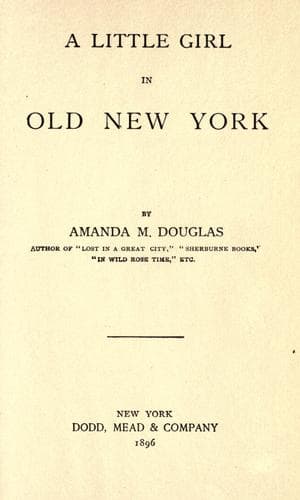
New York (N.Y.) -- History -- 1775-1865 -- Fiction
Early in the gray dawn of July nineteenth, a watchman discovered flames
issuing from an oil store on New Street. A carpenter shop next door was
soon in flames. A large building in which quantities of saltpetre was
stored caught next. A dense smoke filled the air, and a sudden explosive
sound shot out a long tongue of flame that crossed the street. At
intervals of a few moments others followed, causing everybody to fly for
their lives. And at last one grand deafening burst like a tremendous
clap of thunder, and the whole vicinity was in a blaze. Bricks and
pieces of timber flew through the air, injuring many people. Then the
fire spread far and wide, one vast, roaring, crackling sheet of flame.
One brave fireman and several other people were killed, and Engine 22
was wrecked in the explosion.
It was said at first that powder had been stored in the building, but it
was proved on investigation that the saltpetre alone was the dangerous
agent. Three hundred and forty-five buildings were destroyed, at a loss,
it was estimated, of ten millions of dollars. For days there was an
immense throng about the place. The ruins extended from Bowling Green to
Exchange Place.
A relic of Revolutionary times perished in this fire. The bell of the
famous Provost prison, that had been used by the British during their
occupancy of the city, had been removed when the building was remodelled
and placed on the Bridewell at the west of the City Hall, and used for a
fire-alarm bell. When the Bridewell had been destroyed it was
transferred to the cupola of the Naiad Hose Company in Beaver Street. It
rang out its last alarm that morning, for engine house and bell perished
in the flames.
Stephen had been very fortunate in that he was out of the fire district.
He took Margaret and Hanny down to view the great space heaped with
blackened debris, and when a fire alarm was given the little girl used
to shiver with fright for months afterward.
And now schools were considering their closing exercises, and parents of
big boys were puzzled to know just where to start them in life. Ben
declared his preference at last--he wanted to be some sort of a
newspaper man.
They called Mr. Whitney in to council. He was not quite sure he would
recommend beginning there. It would be better to learn the trade
thoroughly at such a place as the Harpers'. Then there would always be
something to fall back upon. Steve did not cordially approve, and Dr.
Joe was quite disappointed. He was ready to help Ben through college.
Newspaper people did not rank as high then as now. There was a good deal
of what came to be called Bohemianism among them, and it was not of the
artistic type. For the one really good position there were a dozen
precarious ones.
Public-domain text, read in full here on John Shaqi.
Reviews
Reviews
No reviews yet
Be the first to share your thoughts on this work.
Elsewhere in the archive
Join the Discussion
Join the discussion
Sign in to leave a comment or review.
Sign InorCreate an account