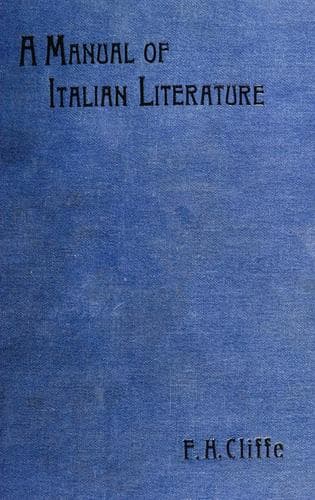
A manual of Italian literatureCliffe, Francis Henry
History
A manual of Italian literature
Cliffe, Francis Henry
Italian literature -- History and criticism
Now boast, for well thou may'st. Say that alone
Of all thy sex art thou to whom I bent
My haughty head, to whom I gladly gave
My heart in homage. Say that thou wert first
(And last, I truly hope), to see mine eyes'
Imploring gaze, and me before thee stand
Timid and fearful (as I write, I burn
With wrath and shame); me of myself deprived,
Each look of thine, each gesture and each word
Observing meekly; at thy haughty freaks
Pale and subdued; then radiant with delight
At any sign of favour, changing hue
At every glance of thine. The charm is gone;
And with it shattered, falls the heavy yoke,
Whence I rejoice. Though weariness be with me,
Yet after such delirium and long thraldom
Gladly my freedorh I again embrace
And my unshackled mind. For if a life
Void of affections and of errors sweet,
Be like a starless night in winter's depth,
Revenge sufficient and sufficient balm
It is to me that here upon the grass
Leisurely lying and unmoved, I gaze
On sky, earth, ocean, and serenely smile.
ON THE PORTRAIT OF A BEAUTIFUL WOMAN
ENGRAVEN ON HER TOMB.
Such was on earth thy form,
But the unpitying storm
Of Death resolved thy beauty into dust.
Dumb witness of the flight of ages here,
This image of thy perished loveliness
Stands all unmoved, as though it held in trust
The guardianship of memory and pain,
Above the ashes that alone remain
Of those sweet charms that did thy being bless.
That tender gaze, thrilling as though with fear
The eyes it pierced, as now it seems to do;
Those lips, abundant with the wealth of pleasure;
That neck, encircled by desire's fond arms;
That hand, Love's richest treasure,
Which when it clasped, responsive pressure knew;
And that fair bosom whose celestial charms
Gave those who saw a wan and pallid hue
From the excess of their adoring passion:
Once were as lovely as these sculptures fashion;
But all that now is left on earth of thee
Is dust and ashes which we may not see;
Thy monument to ages that ensue
Conceals the mournful vision from our view.
Thus Fate doth touch and crumble into dust
Whatever must unto our minds appear
Image of Heaven most precious and most dear.
Oh mystery eternal of the world!
Now fount and treasure of stupendous thought,
Beauty appears in majesty sublime,
Even as a Queen in regal robes empearled,
And seems on earth a heavenly splendour brought
From fairer realms beyond the bounds of time;
She seems to give us hope
Of fates that can with mortal sorrow cope,
Of happier homes and planets more divine
Where golden splendours shine;
But on the morrow, feeble though the blow
Which struck her so that she declines and dies,
Dreadful to see and abject in our eyes
Becomes that peerless beauty which before
Public-domain text, read in full here on John Shaqi.
Reviews
Reviews
No reviews yet
Be the first to share your thoughts on this work.
Elsewhere in the archive
Join the Discussion
Join the discussion
Sign in to leave a comment or review.
Sign InorCreate an account