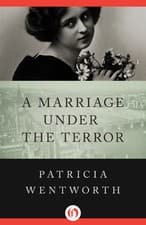
France -- History -- Revolution, 1789-1799 -- Fiction
She would scream no more now. The knife clattered to the floor from
Rosalie’s suddenly opened hand, and, as if the sound were a signal,
Thérèse gave one convulsive shudder, which passed with a gush of
crimson.
Rosalie went down on her knees, and gathered a handful of the brown
tubers from the piled basket. She had to push the corpse aside to get
at them, and she did it without a glance.
Then she threw the potatoes back into the basket one by one. She wore a
complacent smile. Her eyes were intent.
"Now, there is blood," she said, nodding as if satisfied. "Now, there
is blood."
CHAPTER XVIII
A TRIAL AND A WEDDING
Of the hours that passed after that death-like swoon of hers Mlle de
Rochambeau never spoke. Never again could she open the door behind which
lurked madness, and an agony such as women have had to bear, time and
again, but of which no woman whom it has threatened can speak. Hébert
had given his orders, and she was thrust into an empty cell, where she
lay cowering, with hidden face, and lips that trembled too much to pray.
Hébert’s threat lay in her mind like a poison in the body. Soon it
would kill—but not in time, not soon enough. She could not think, or
reason, and hope was dead. Something else had come in its place, a
thing unformulated and dreadful, not to be thought of, unbelievable, and
yet unbearably, irrevocably present.
Oh, the long, shuddering hours, and yet, by a twist of the tortured
brain, how short—how brief—for now she saw them as barriers between her
and hell, and each as it fell away left her a thing more utterly
unhelped.
When they brought her out in the morning, and she stepped from the dark
prison into the warm, sunny daylight, she raised her head and looked
about her a little wonderingly.
Still a sun in the sky! Still summer shine and breath, and beautiful
calm space of blue ethereal light above. A sort of stunned bewilderment
fell upon her, and she sat very still and quiet all the way.
Inside the hall citizens crowded and jostled one another for a place;
plump, respectable mothers of families, cheek by jowl with draggled
wrecks of the slums, moneyed shopkeepers, tattered loafers, a wild-eyed
Jacobin or two, and everywhere women, women, women. Women with their
children, lifting a round-eyed starer high to see the white-faced
aristocrat go past; women with their work, whose chattering tongues kept
pace with the clattering needles; women fiercer and more cruel than men,
to whom death and blood and anguish were become a stimulant more fatally
potent than any alcohol.
There were men there too, gaping, yawning, telling horrible tales, men
whose hands had dripped innocent blood in September. There was a reek
of garlic, the air was abominably hot and close, and wherever citizens
could get an elbow free one saw a mopping of greasy faces going forward.
Public-domain text, read in full here on John Shaqi.
Reviews
Reviews
No reviews yet
Be the first to share your thoughts on this work.
Elsewhere in the archive
Join the Discussion
Join the discussion
Sign in to leave a comment or review.
Sign InorCreate an account