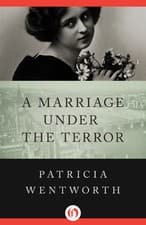
France -- History -- Revolution, 1789-1799 -- Fiction
Refreshments were being passed round, and Deputies who were at leisure
bowed, and smiled, and did the honours, as if it were a place of
amusement, and not a hall of judgment.
A bold, brown-faced woman, with magnificent black eyes, her full figure
much accentuated by a flaring tricolour sash, swept to the front of the
gallery, and looked down. In her wake came a sleepy, white-fleshed
blonde, mincing as she walked. She too wore the tricolour, and
Dangeau’s lips curled at the desecration.
"Philippe is voting," cried the brown woman loudly. "See, Jeanne, there
he comes!"
Dangeau looked down, and saw Philippe Égalité, sometime Philippe
d’Orleans, prince of the blood and cousin of the King, pass up the
tribune steps. Under the lamps his face showed red and blotched, his
eyes unsteady; but he walked jauntily, twisting a seal at his fob. His
attire bespoke the dandy, his manner the poseur. Opposite to Vergniaud
he bowed with elegance, and cried in a voice of loud effrontery, "I vote
for Death."
Through the Assembly ran a shudder of recoil. Natural feeling was not
yet brayed to dust in the mortar of the Revolution, and it thrilled and
quickened to the spectacle of kinsman rising against kinsman, and the
old blood royal of France turning from its ruined head publicly, and in
the sight of all men.
"It is good that Louis should die, but it is not good that Philippe
should vote for his death. Has the man no decency?" growled Danton at
Dangeau’s ear.
Long after, when his own hour was striking, Philippe d’Orleans protested
that he had voted upon his soul and conscience—the soul whose existence
he denied, and the conscience whose voice he had stifled for forty
years. Be that between him and that soul and conscience, but, as he
descended the tribune steps, Girondin, Jacobin, and Cordelier alike drew
back from him, and men who would have cried death to the King’s cousin,
cried none the less, "Shame on Égalité!"
Only the bold brown woman and her companion laughed. The former even
leaned across the bar and kissed her hand, waving, and beckoning him.
Dangeau’s gaze, half sardonically curious, half disgusted, rested upon
the scene.
"All posterity will gaze upon what is done this day," he said in a low
voice to Danton—"and they will see this."
"The grapes are trodden, the wine ferments, and the scum rises,"
returned Danton on a deep, growling note.
"Such scum as this?"
"Just such scum as this!"
Below, one of the Girondins voted for imprisonment, and the upper
galleries hissed and rocked.
"Death, death, death!" cried the next in order.
"Death, and not so much talk about it!"
"Death, by all means death!"
The blonde woman, Jeanne Fresnay, was pricking off the votes on a card.
"Ah—at last!" she laughed. "I thought I should never get the hundred.
Now we have one for banishment, ten for imprisonment, and a hundred for
death."
The brown Marguerite Didier produced her own card—a dainty trifle tied
with a narrow tricolour ribbon.
Public-domain text, read in full here on John Shaqi.
Reviews
Reviews
No reviews yet
Be the first to share your thoughts on this work.
Elsewhere in the archive
Join the Discussion
Join the discussion
Sign in to leave a comment or review.
Sign InorCreate an account