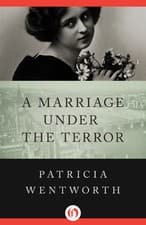
France -- History -- Revolution, 1789-1799 -- Fiction
"Tchtt," said Rosalie, humping a billowy shoulder—"the girl is virtuous
and hard-working, too virtuous, I dare say, to please some people. Yes,
that I can very well believe," and her gaze became unpleasantly
pointed—"Well, I will call her down."
She moved to the inner door as she spoke, and called up the stair:
"Marie! Marie Roche! Descend then; you are wanted."
Hébert stood aside with an ill grace, but he was quite well aware that
to insist might, after yesterday’s scene, bring the whole quarter about
his ears, and effectually spoil the ingenious plans he was revolving in
his mind.
He moved impatiently as Mademoiselle delayed, and, at the sound of her
footstep, started eagerly to meet her.
She came in quite unsuspiciously, looking at Rosalie, and at first
seeing no one else. When Hébert’s movements brought him before her, she
turned deadly white, and a faintness swept over her. She caught the
door, fighting it back, till it showed only in that change of colour,
and a rather fixed look in the dark blue eyes.
Hébert checked a smile, and entrenched himself behind his office.
"You are Marie Roche, seamstress?"
"Certainly, Citizen."
"Father’s and mother’s names?"
"By what right do you question me?" the voice was icy with offence, and
Rosalie stirred uneasily.
"It is the Citizen Deputy Hébert; answer him," she growled—and Hébert
commended her with a look.
Really this was amusing—the girl had spirit as well as beauty.
Decidedly she was worth pursuing.
"Father’s and mother’s names?" he repeated.
Mademoiselle bit her lip, and gave the names she had already given when
she took out her certificate of Citizenship.
They were those of her foster-parents, and had she not had that
rehearsal, she might have faltered, and hesitated. As it was, her
answer came clear and prompt.
Hébert scowled.
"You are not telling the truth," he observed in offensive tones,
expecting an outburst, but Mlle de Rochambeau merely looked past him
with an air of weary indifference.
"I am not satisfied," he burst out. "If you had been frank and open,
you would have found me a good friend, but I do not like lies, and you
are telling them. Now I am not a safe person to tell lies to, not at
all—remember that. My friendship is worth having, and you may choose
between it and my enmity, my virtuous Citoyenne."
Mademoiselle raised her delicate eyebrows very slightly.
"The Citizen does me altogether too much honour," she observed, her
voice in direct contradiction to her words.
"Tiens," he said, losing self-control, "you are a proud minx, and pride
goes before a fall. Are you not afraid? Come," dropping his voice, as
he caught Rosalie’s ironical eye—"Come, be a sensible girl, and you
shall not find me hard to deal with. I am a slave to beauty—a smile, a
pleasant look or two, and I am your friend. Come then, Citoyenne Marie."
Mademoiselle remained silent. She looked past Hébert, at the street.
Rosalie got up exasperated, and pulled her aside.
Public-domain text, read in full here on John Shaqi.
Reviews
Reviews
No reviews yet
Be the first to share your thoughts on this work.
Elsewhere in the archive
Join the Discussion
Join the discussion
Sign in to leave a comment or review.
Sign InorCreate an account