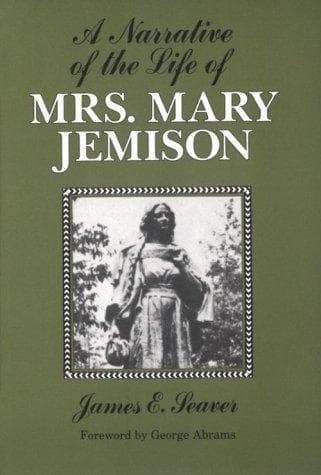
A Narrative of the Life of Mrs. Mary JemisonSeaver, James E. (James Everett)
History
A Narrative of the Life of Mrs. Mary Jemison
Seaver, James E. (James Everett)
Jemison, Mary, 1743-1833; Seneca Indians
He died at the Delaware town, on the river De Trench, in the year
1814 or 15, and left two white widows and one squaw, with a number of
children, to lament his loss.
By his last will he gave all his property to his last wife (Morilla,)
and her children, without providing in the least for the support of
Lucy, or any of the other members of his family. Lucy, soon after his
death, went with her children down the Ohio river, to receive assistance
from her friends.
In the revolutionary war, Allen was a tory, and by that means became
acquainted with our Indians, when they were in the neighborhood of his
native place, desolating the settlements on the Susquehannah. In those
predatory battles, he joined them, and (as I have often heard the
Indians say,) for cruelty was not exceeded by any of his Indian
comrades!
At one time, when he was scouting with the Indians in the Susquehannah
country, he entered a house very early in the morning, where he found a
man, his wife, and one child, in bed. The man, as he entered the door,
instantly sprang on the floor, for the purpose of defending himself and
little family; but Allen dispatched him at one blow. He then cut off his
head and threw it bleeding into the bed with the terrified woman; took
the little infant from its mother's breast, and holding it by its legs,
dashed its head against the jamb, and left the unhappy widow and mother
to mourn alone over her murdered family. It has been said by some, that
after he had killed the child, he opened the fire and buried it under
the coals and embers: But of that I am not certain. I have often heard
him speak of that transaction with a great degree of sorrow, and as the
foulest crime he had ever committed--one for which I have no doubt he
repented.
CHAPTER IX.
Mrs. Jemison has liberty to go to her Friends.--Chooses to stay.--Her
Reasons, &c.--Her Indian Brother makes provision for her Settlement.--He
goes to Grand River and dies.--Her Love for him, &c.--She is presented
with the Gardow Reservation.--Is troubled by Speculators.--Description
of the Soil, &c. of her Flats.--Indian notions of the ancient
Inhabitants of this Country.
Soon after the close of the revolutionary war, my Indian brother,
Kau-jises-tau-ge-au (which being interpreted signifies Black Coals,)
offered me my liberty, and told me that if it was my choice I might go
to my friends.
My son, Thomas, was anxious that I should go; and offered to go with me
and assist me on the journey, by taking care of the younger children,
and providing food as we travelled through the wilderness. But the
Chiefs of our tribe, suspecting from his appearance, actions, and a
few warlike exploits, that Thomas would be a great warrior, or a good
counsellor, refused to let him leave them on any account whatever.
Public-domain text, read in full here on John Shaqi.
Reviews
Reviews
No reviews yet
Be the first to share your thoughts on this work.
Join the Discussion
Join the discussion
Sign in to leave a comment or review.
Sign InorCreate an account