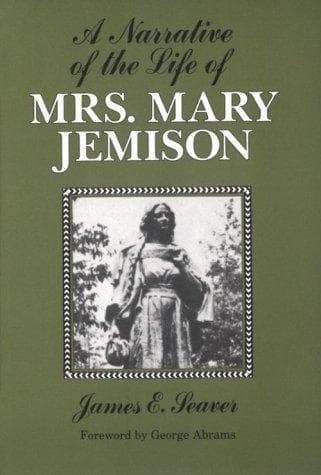
A Narrative of the Life of Mrs. Mary JemisonSeaver, James E. (James Everett)
History
A Narrative of the Life of Mrs. Mary Jemison
Seaver, James E. (James Everett)
Jemison, Mary, 1743-1833; Seneca Indians
I returned soon after, and found my son lifeless at the door, on the
spot where he was killed! No one can judge of my feelings on seeing this
mournful spectacle; and what greatly added to my distress, was the
fact that he had fallen by the murderous hand of his brother! I felt my
situation unsupportable. Having passed through various scenes of trouble
of the most cruel and trying kind, I had hoped to spend my few remaining
days in quietude, and to die in peace, surrounded by my family. This
fatal event, however, seemed to be a stream of woe poured into my cup
of afflictions, filling it even to overflowing, and blasting all my
prospects.
As soon as I had recovered a little from the shock which I felt at the
sight of my departed son, and some of my neighbors had come in to
assist in taking care of the corpse, I hired Shanks, an Indian, to go to
Buffalo, and carry the sorrowful news of Thomas' death, to our friends
at that place, and request the Chiefs to hold a Council, and dispose
of John as they should think proper. Shanks set out on his errand
immediately,--and John, fearing that he should be apprehended and
punished for the crime he had committed, at the same time went off
towards Caneadea.
Thomas was decently interred in a style corresponding with his rank.
The Chiefs soon assembled in council on the trial of John, and after
having seriously examined the matter according to their laws, justified
his conduct, and acquitted him. They considered Thomas to have been the
first transgressor, and that for the abuses which he had offered, he had
merited from John the treatment that he had received.
John, on learning the decision of the council, returned to his family.
Thomas (except when intoxicated, which was not frequent,) was a kind
and tender child, willing to assist me in my labor, and to remove every
obstacle to my comfort. His natural abilities were said to be of a
superior cast, and he soared above the trifling subjects of revenge,
which are common amongst Indians, as being far beneath his attention.
In his childish and boyish days, his natural turn was to practise in the
art of war, though he despised the cruelties that the warriors
inflicted upon their subjugated enemies. He was manly in his deportment,
courageous and, active; and commanded respect. Though he appeared well
pleased with peace, he was cunning in Indian warfare, and succeeded to
admiration in the execution of his plans.
Public-domain text, read in full here on John Shaqi.
Reviews
Reviews
No reviews yet
Be the first to share your thoughts on this work.
Elsewhere in the archive
Join the Discussion
Join the discussion
Sign in to leave a comment or review.
Sign InorCreate an account