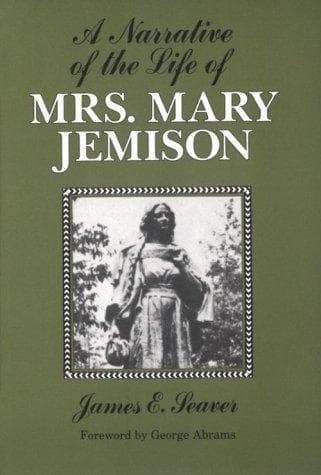
A Narrative of the Life of Mrs. Mary JemisonSeaver, James E. (James Everett)
History
A Narrative of the Life of Mrs. Mary Jemison
Seaver, James E. (James Everett)
Jemison, Mary, 1743-1833; Seneca Indians
At the age of fourteen or fifteen years, he went into the war with
manly fortitude, armed with a tomahawk and scalping knife; and when he
returned, brought one white man a prisoner, whom he had taken with his
own hands, on the west branch of the Susquehannah river. It so happened,
that as he was looking out for his enemies, he discovered two men
boiling sap in the woods. He watched them unperceived, till dark when he
advanced with a noiseless step to where they were standing, caught one
of them before they were apprized of danger, and conducted him to the
camp. He was well treated while a prisoner, and redeemed at the close of
the war.
At the time Kaujisestaugeau gave me my liberty to go to my friends,
Thomas was anxious to go with me; but as I have before observed, the
Chiefs would not suffer him to leave them on the account of his courage
and skill in war: expecting that they should need his assistance. He
was a great Counsellor and a Chief when quite young; and in the last
capacity, went two or three times to Philadelphia to assist in making
treaties with the people of the states.
Thomas had four wives, by whom he had eight children. Jacob Jemison,
his second son by his last wife, who is at this time twenty-seven or
twenty-eight years of age, went to Dartmouth college, in the spring of
1816, for the purpose of receiving a good education, where it was said
that he was an industrious scholar, and made great proficiency in the
study of the different branches to which he attended. Having spent two
years at that Institution, he returned in the winter of 1818, and is now
at Buffalo; where I have understood that he contemplates commencing the
study of medicine, as a profession.
Thomas, at the time he was killed, was a few moons over fifty-two years
old, and John was forty-eight. As he was naturally good natured, and
possessed a friendly disposition, he would not have come to so untimely
an end, had it not been far his intemperance. He fell a victim to the
use of ardent spirits--a poison that will soon exterminate the Indian
tribes in this part of the country, and leave their names without a root
or branch. The thought is melancholy; but no arguments, no examples,
however persuasive or impressive, are sufficient to deter an Indian for
an hour from taking the potent draught, which he knows at the time will
derange his faculties, reduce him to a level with the beasts, or deprive
him of life!
CHAPTER XI.
Public-domain text, read in full here on John Shaqi.
Reviews
Reviews
No reviews yet
Be the first to share your thoughts on this work.
Elsewhere in the archive
Join the Discussion
Join the discussion
Sign in to leave a comment or review.
Sign InorCreate an account