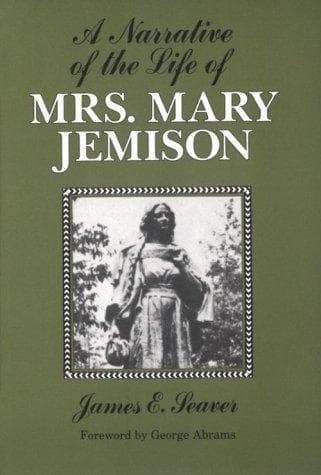
A Narrative of the Life of Mrs. Mary JemisonSeaver, James E. (James Everett)
History
A Narrative of the Life of Mrs. Mary Jemison
Seaver, James E. (James Everett)
Jemison, Mary, 1743-1833; Seneca Indians
The council being opened, the Chiefs began to examine Crawford on
various subjects relative to the war. At length they enquired who
conducted the military operations of the American army on the Ohio and
Susquehannah rivers, during the year before; and who had led that army
against them with so much skill and so uniform success? Crawford
very honestly and without suspecting any harm from his reply promptly
answered that he was the man who had led his countrymen to victory,
who had driven the enemy from the settlements, and by that means had
procured a great degree of happiness to many of his fellow-citizens.
Upon hearing this, a Chief, who had lost a son in the year before, in
a battle where Colonel Crawford commanded, left his station in the
council, stepped to Crawford, blacked his face, and at the same time
told him that the next day he should be burnt.
The council was immediately dissolved on its hearing the sentence from
the Chief, and the prisoners were taken off the ground, and kept in
custody through the night. Crawford now viewed his fate as sealed; and
despairing of ever returning to his home or his country, only dreaded
the tediousness of death, as commonly inflicted by the savages, and
earnestly hoped that he might be despatched at a single blow.
Early the next morning, the Indians assembled at the place of execution,
and Crawford was led to the post--the goal of savage torture, to which
he was fastened. The post was a stick of timber placed firmly in the
ground, having an arm framed in at the top, and extending some six
or eight feet from it, like the arm of a sign post. A pile of wood
containing about two cords, lay a few feet from the place where he
stood, which he was informed was to be kindled into a fire that would
burn him alive, as many had been burnt on the same spot, who had been
much less deserving than himself.
Gurty stood and supposedly looked on the preparations that were making
for the funeral of one his former playmates; a hero by whose side he
had fought; of a man whose valor had won laurels which, if he could
have returned, would have been strewed upon his grave, by his grateful
countrymen. Dreading the agony that he saw he was about to feel,
Crawford used every argument which his perilous situation could suggest
to prevail upon Gurty to ransom him at any price, and deliver him (as it
was in his power,) from the savages, and their torments. Gurty heard his
prayers, and expostulations, and saw his tears with indifference,
and finally told the forsaken victim that he would not procure him a
moment's respite, nor afford him the most trifling assistance.
Public-domain text, read in full here on John Shaqi.
Reviews
Reviews
No reviews yet
Be the first to share your thoughts on this work.
Elsewhere in the archive
Join the Discussion
Join the discussion
Sign in to leave a comment or review.
Sign InorCreate an account