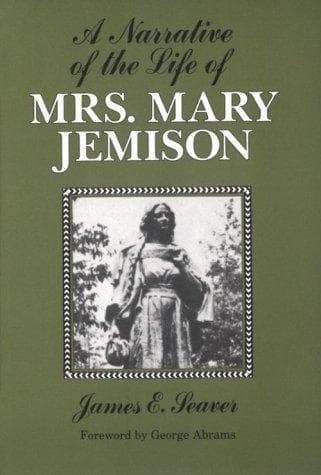
A Narrative of the Life of Mrs. Mary JemisonSeaver, James E. (James Everett)
History
A Narrative of the Life of Mrs. Mary Jemison
Seaver, James E. (James Everett)
Jemison, Mary, 1743-1833; Seneca Indians
I observed to them that as I was incapable of transacting business of
that nature, I would wait till Mr. Thomas Clute, (a neighbor on whom I
depended,) should return from Albany, before I should do any thing about
it. To this Jemison replied that if I waited till Mr. Clute returned,
he should not get the land at all, and appeared very anxious to have the
business closed without delay. On my part, I felt disposed to give him
some land, but knowing my ignorance of writing, feared to do it alone,
lest they might include as much land they pleased, without my knowledge.
They then read the deed which my friend had prepared before he came from
home, describing a piece of land by certain bounds that were a specified
number of chains and links from each other. Not understanding the length
of a chain or link, I described the bounds of a piece of land that I
intended Jemison should have, which they said was just the same that the
deed contained and no more. I told them that the deed must not include
a lot that was called the Steele place, and they assured me that it did
not. Upon this, putting confidence in them both, I signed the deed to
George Jemison, containing, and conveying to him as I supposed, forty
acres of land. The deed being completed they charged me never to mention
the bargain which I had then made to any person; because if I did,
they said it would spoil the contract. The whole matter was afterwards
disclosed; when it was found that that deed instead of containing only
forty acres, contained four hundred, and that one half of it actually
belonged to my friend, as it had been given to him by Jemison as a
reward for his trouble in procuring the deed, in the fraudulent manner
above mentioned.
My friend, however, by the advice of some well disposed people, awhile
afterwards gave up his claim; but Jemison held his till he sold it for a
trifle to a gentleman in the south part of Genesee county.
Sometime after the death of my son Thomas, one of his sons went to
Jemison to get the cow that I had let him have two years; but Jemison
refused to let her go, and struck the boy so violent a blow as to almost
kill him. Jemison then run to Jellis Clute, Esq. to procure a warrant to
take the boy; but Young King, an Indian Chief, went down to Squawky hill
to Esq. Clute's, and settled the affair by Jemison's agreeing never
to use that club again. Having satisfactorily found out the friendly
disposition of my cousin towards me, I got him off my premises as soon
as possible.
CHAPTER XIV.
Public-domain text, read in full here on John Shaqi.
Reviews
Reviews
No reviews yet
Be the first to share your thoughts on this work.
Elsewhere in the archive
Join the Discussion
Join the discussion
Sign in to leave a comment or review.
Sign InorCreate an account