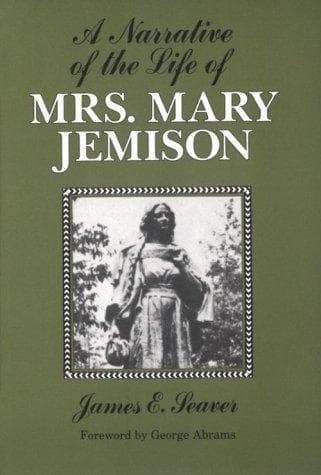
A Narrative of the Life of Mrs. Mary JemisonSeaver, James E. (James Everett)
History
A Narrative of the Life of Mrs. Mary Jemison
Seaver, James E. (James Everett)
Jemison, Mary, 1743-1833; Seneca Indians
From his childhood, he carried something in his features indicative of
an evil disposition, that would result in the perpetration of enormities
of some kind; and it was the opinion and saying of Ebenezer Allen, that
he would be a bad man, and be guilty of some crime deserving of death.
There is no doubt but what the thoughts of murder rankled in his breast,
and disturbed his mind even in his sleep; for he dreamed that he had
killed Thomas for a trifling offence, and thereby forfeited his own
life. Alarmed at the revelation, and fearing that he might in some
unguarded moment destroy his brother, he went to the Black Chief, to
whom he told the dream, and expressed his fears that the vision would
be verified. Having related the dream, together with his feelings on the
subject, he asked for the best advice that his old friend was capable
of giving, to prevent so sad an event. The Black Chief, with his usual
promptitude, told him, that from the nature of the dream, he was fearful
that something serious would take place between him and Thomas; and
advised him by all means to govern his temper, and avoid any quarrel
which in future he might see arising, especially if Thomas was a party.
John, however, did not keep the good counsel of the Chief; for soon
after he killed Thomas, as I have related.
John left two wives with whom he had lived at the same time, and raised
nine children. His widows are now living at Caneadea with their father,
and keep their children with, and near them. His children are tolerably
white, and have got light colored hair. John died about the last day of
June, 1817, aged 54 years.
Doctor and Jack, having finished their murderous design, fled before
they could be apprehended, and lay six weeks in the woods back of
Canisteo. They then returned and sent me some wampum by Chongo, (my
son-in-law,) and Sun-ge-waw (that is Big Kettle) expecting that I would
pardon them, and suffer them to live as they had done with their
tribe. I however, would not accept their wampum, but returned it with
a request, that, rather than have them killed, they would run away and
keep out of danger.
On their receiving back the wampum, they took my advice, and prepared to
leave their country and people immediately. Their relatives accompanied
them a short distance on their journey, and when about to part, their
old uncle, the Tall Chief, addressed them in the following pathetic and
sentimental speech:
"Friends, hear my voice!--When the Great Spirit made Indians, he made
them all good, and gave them good corn-fields; good rivers, well stored
with fish; good forests, filled with game and good bows and arrows. But
very soon each wanted more than his share, and Indians quarrelled with
Indians, and some were killed, and others were wounded. Then the Great
Spirit made a very good word, and put it in every Indians breast, to
tell us when we have done good, or when we have done bad; and that word
has never told a lie.
Public-domain text, read in full here on John Shaqi.
Reviews
Reviews
No reviews yet
Be the first to share your thoughts on this work.
Elsewhere in the archive
Join the Discussion
Join the discussion
Sign in to leave a comment or review.
Sign InorCreate an account