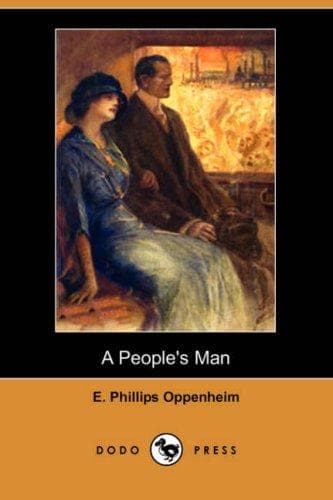
A People's ManOppenheim, E. Phillips (Edward Phillips)
General
A People's Man
Oppenheim, E. Phillips (Edward Phillips)
Detective and mystery stories
"Now I am going to ask you something else," she went on. "That first
night when we talked together, you seemed so full of hope, so dauntless.
Since then, is it my fancy--since you came back from Manchester--are you
a little disappointed 'with life? Don't you know in your heart that
you've done what's best?"
"I wish I did," he answered simply. "My common sense tells me that I
have chosen well, and then sometimes, in the nights, or when I am alone,
other thoughts come to me, and I feel almost as though I had been
faithless, as though I had simply chosen the easier way. Look how
pleasant it is all being made for me! I am no longer an outcast; I bask
in the sun of your uncle's patronage; people ask me to dinner, seek my
friendship, people whom I feel ought to hate me. I am not sure about it
all."
"Listen," she said, "if you had indeed pulled down those pillars, don't
you think that day by day and night by night you would have been haunted
by the faces of those whom you had destroyed? Think of the children who
would have died of starvation, the women who would have been torn from
their husbands, the ruined homes, the sorrow and the misery all through
the land. Yours would have been the hand which had dealt this blow.
You would not have lived to have seen into the future. Would it have
been enough for you to have believed that you had done it for the
best--that that unborn generation of which you spoke would have
unfitted? Oh, I do not think so! I believe that when you realise it,
you must be glad."
"It is at any rate consoling to hear you say so," he remarked. "Yet,
when you have made up your mind to play the martyr, it is a little
hard," he added, helping himself to strawberries, "to be treated like a
pampered being."
"In other words," she laughed, "you are discontented because you have
been successful?"
"I suppose human nature never meant to let us rest satisfied."
"Don't you ever think of yourself," she asked, "what your own life is
going to be? You've settled down now. You will be a Member of
Parliament in a few weeks, a Cabinet Minister before long. I know what
my uncle thinks of you. He believes in you. To tell you the truth, so
do I."
"I am glad."
"I believe," she went on, "that you will do the work that you came here
to do. There is no reason why you should not do it from the Cabinet.
But there is the rest--your own life. Are you never going to amuse
yourself, to take holiday, to draw some of the outside things into your
scheme of being?"
He sat quite silent for a little time. He was inclined to struggle
against the charm of her soft voice, the easy intimacy with which she
treated him. In a sense he felt as though he were losing control of
himself.
"I don't know," he said. "I think one ought to find one's work
sufficient for a time. It is engrossing, isn't it? And that reminds
me--I must go."
Public-domain text, read in full here on John Shaqi.
Reviews
Reviews
No reviews yet
Be the first to share your thoughts on this work.
Elsewhere in the archive
Join the Discussion
Join the discussion
Sign in to leave a comment or review.
Sign InorCreate an account