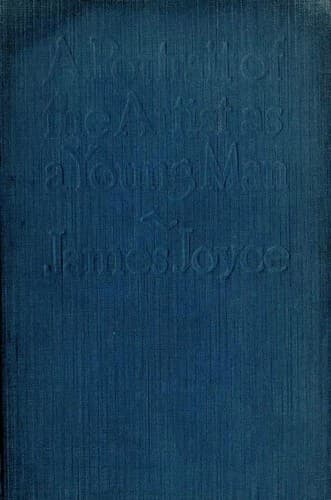
A Portrait of the Artist as a Young ManJoyce, James
General
A Portrait of the Artist as a Young Man
Joyce, James
Artists -- Fiction; Autobiographical fiction; Bildungsromans; Dublin (Ireland) -- Fiction; Young men -- Fiction
A flame began to flutter again on Stephen’s cheek as he heard in this
proud address an echo of his own proud musings. How often had he seen
himself as a priest wielding calmly and humbly the awful power of which
angels and saints stood in reverence! His soul had loved to muse in
secret on this desire. He had seen himself, a young and silentmannered
priest, entering a confessional swiftly, ascending the altarsteps,
incensing, genuflecting, accomplishing the vague acts of the priesthood
which pleased him by reason of their semblance of reality and of their
distance from it. In that dim life which he had lived through in his
musings he had assumed the voices and gestures which he had noted with
various priests. He had bent his knee sideways like such a one, he had
shaken the thurible only slightly like such a one, his chasuble had
swung open like that of such another as he turned to the altar again
after having blessed the people. And above all it had pleased him to
fill the second place in those dim scenes of his imagining. He shrank
from the dignity of celebrant because it displeased him to imagine that
all the vague pomp should end in his own person or that the ritual
should assign to him so clear and final an office. He longed for the
minor sacred offices, to be vested with the tunicle of subdeacon at
high mass, to stand aloof from the altar, forgotten by the people, his
shoulders covered with a humeral veil, holding the paten within its
folds or, when the sacrifice had been accomplished, to stand as deacon
in a dalmatic of cloth of gold on the step below the celebrant, his
hands joined and his face towards the people, and sing the chant, _Ite
missa est._ If ever he had seen himself celebrant it was as in the
pictures of the mass in his child’s massbook, in a church without
worshippers, save for the angel of the sacrifice, at a bare altar, and
served by an acolyte scarcely more boyish than himself. In vague
sacrificial or sacramental acts alone his will seemed drawn to go forth
to encounter reality; and it was partly the absence of an appointed
rite which had always constrained him to inaction whether he had
allowed silence to cover his anger or pride or had suffered only an
embrace he longed to give.
Public-domain text, read in full here on John Shaqi.
Reviews
Reviews
No reviews yet
Be the first to share your thoughts on this work.
Elsewhere in the archive
Join the Discussion
Join the discussion
Sign in to leave a comment or review.
Sign InorCreate an account