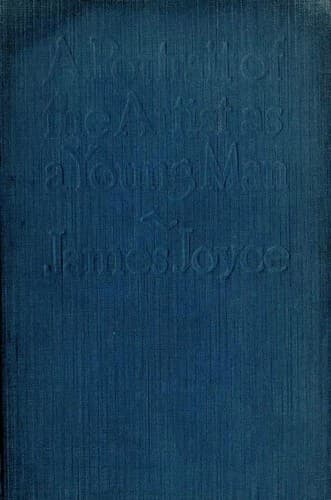
A Portrait of the Artist as a Young ManJoyce, James
General
A Portrait of the Artist as a Young Man
Joyce, James
Artists -- Fiction; Autobiographical fiction; Bildungsromans; Dublin (Ireland) -- Fiction; Young men -- Fiction
—Let us take woman, said Stephen.
—Let us take her! said Lynch fervently.
—The Greek, the Turk, the Chinese, the Copt, the Hottentot, said
Stephen, all admire a different type of female beauty. That seems to be
a maze out of which we cannot escape. I see, however, two ways out. One
is this hypothesis: that every physical quality admired by men in women
is in direct connexion with the manifold functions of women for the
propagation of the species. It may be so. The world, it seems, is
drearier than even you, Lynch, imagined. For my part I dislike that way
out. It leads to eugenics rather than to esthetic. It leads you out of
the maze into a new gaudy lectureroom where MacCann, with one hand on
_The Origin of Species_ and the other hand on the new testament, tells
you that you admired the great flanks of Venus because you felt that
she would bear you burly offspring and admired her great breasts
because you felt that she would give good milk to her children and
yours.
—Then MacCann is a sulphuryellow liar, said Lynch energetically.
—There remains another way out, said Stephen, laughing.
—To wit? said Lynch.
—This hypothesis, Stephen began.
A long dray laden with old iron came round the corner of Sir Patrick
Dun’s hospital covering the end of Stephen’s speech with the harsh roar
of jangled and rattling metal. Lynch closed his ears and gave out oath
after oath till the dray had passed. Then he turned on his heel rudely.
Stephen turned also and waited for a few moments till his companion’s
ill-humour had had its vent.
—This hypothesis, Stephen repeated, is the other way out: that, though
the same object may not seem beautiful to all people, all people who
admire a beautiful object find in it certain relations which satisfy
and coincide with the stages themselves of all esthetic apprehension.
These relations of the sensible, visible to you through one form and to
me through another, must be therefore the necessary qualities of
beauty. Now, we can return to our old friend saint Thomas for another
pennyworth of wisdom.
Lynch laughed.
—It amuses me vastly, he said, to hear you quoting him time after time
like a jolly round friar. Are you laughing in your sleeve?
—MacAlister, answered Stephen, would call my esthetic theory applied
Aquinas. So far as this side of esthetic philosophy extends, Aquinas
will carry me all along the line. When we come to the phenomena of
artistic conception, artistic gestation, and artistic reproduction I
require a new terminology and a new personal experience.
—Of course, said Lynch. After all Aquinas, in spite of his intellect,
was exactly a good round friar. But you will tell me about the new
personal experience and new terminology some other day. Hurry up and
finish the first part.
Public-domain text, read in full here on John Shaqi.
Reviews
Reviews
No reviews yet
Be the first to share your thoughts on this work.
Elsewhere in the archive
Join the Discussion
Join the discussion
Sign in to leave a comment or review.
Sign InorCreate an account