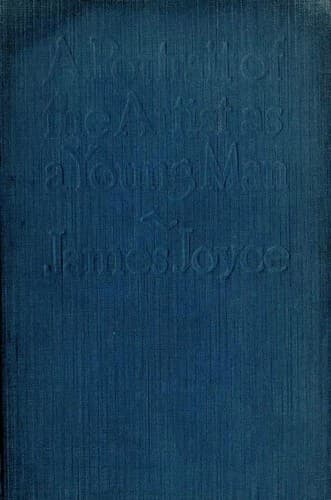
A Portrait of the Artist as a Young ManJoyce, James
General
A Portrait of the Artist as a Young Man
Joyce, James
Artists -- Fiction; Autobiographical fiction; Bildungsromans; Dublin (Ireland) -- Fiction; Young men -- Fiction
The night of the Whitsuntide play had come and Stephen from the window
of the dressingroom looked out on the small grassplot across which
lines of Chinese lanterns were stretched. He watched the visitors come
down the steps from the house and pass into the theatre. Stewards in
evening dress, old Belvedereans, loitered in groups about the entrance
to the theatre and ushered in the visitors with ceremony. Under the
sudden glow of a lantern he could recognise the smiling face of a
priest.
The Blessed Sacrament had been removed from the tabernacle and the
first benches had been driven back so as to leave the dais of the altar
and the space before it free. Against the walls stood companies of
barbells and Indian clubs; the dumbbells were piled in one corner: and
in the midst of countless hillocks of gymnasium shoes and sweaters and
singlets in untidy brown parcels there stood the stout leatherjacketed
vaulting horse waiting its turn to be carried up on the stage and set
in the middle of the winning team at the end of the gymnastic display.
Stephen, though in deference to his reputation for essay writing he had
been elected secretary to the gymnasium, had had no part in the first
section of the programme but in the play which formed the second
section he had the chief part, that of a farcical pedagogue. He had
been cast for it on account of his stature and grave manners for he was
now at the end of his second year at Belvedere and in number two.
A score of the younger boys in white knickers and singlets came
pattering down from the stage, through the vestry and into the chapel.
The vestry and chapel were peopled with eager masters and boys. The
plump bald sergeant major was testing with his foot the springboard of
the vaulting horse. The lean young man in a long overcoat, who was to
give a special display of intricate club swinging, stood near watching
with interest, his silver-coated clubs peeping out of his deep
sidepockets. The hollow rattle of the wooden dumbbells was heard as
another team made ready to go up on the stage: and in another moment
the excited prefect was hustling the boys through the vestry like a
flock of geese, flapping the wings of his soutane nervously and crying
to the laggards to make haste. A little troop of Neapolitan peasants
were practising their steps at the end of the chapel, some circling
their arms above their heads, some swaying their baskets of paper
violets and curtseying. In a dark corner of the chapel at the gospel
side of the altar a stout old lady knelt amid her copious black skirts.
When she stood up a pinkdressed figure, wearing a curly golden wig and
an oldfashioned straw sunbonnet, with black pencilled eyebrows and
cheeks delicately rouged and powdered, was discovered. A low murmur of
curiosity ran round the chapel at the discovery of this girlish figure.
One of the prefects, smiling and nodding his head, approached the dark
corner and, having bowed to the stout old lady, said pleasantly:
Public-domain text, read in full here on John Shaqi.
Reviews
Reviews
No reviews yet
Be the first to share your thoughts on this work.
Join the Discussion
Join the discussion
Sign in to leave a comment or review.
Sign InorCreate an account