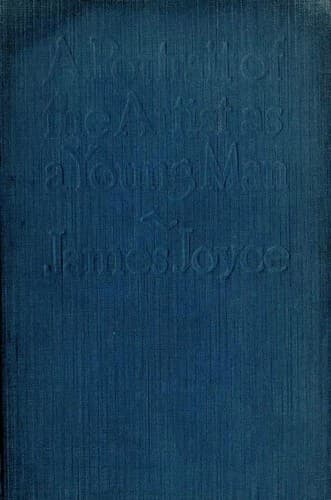
A Portrait of the Artist as a Young ManJoyce, James
General
A Portrait of the Artist as a Young Man
Joyce, James
Artists -- Fiction; Autobiographical fiction; Bildungsromans; Dublin (Ireland) -- Fiction; Young men -- Fiction
Stephen watched the three glasses being raised from the counter as his
father and his two cronies drank to the memory of their past. An abyss
of fortune or of temperament sundered him from them. His mind seemed
older than theirs: it shone coldly on their strifes and happiness and
regrets like a moon upon a younger earth. No life or youth stirred in
him as it had stirred in them. He had known neither the pleasure of
companionship with others nor the vigour of rude male health nor filial
piety. Nothing stirred within his soul but a cold and cruel and
loveless lust. His childhood was dead or lost and with it his soul
capable of simple joys and he was drifting amid life like the barren
shell of the moon.
Art thou pale for weariness
Of climbing heaven and gazing on the earth,
Wandering companionless...?
He repeated to himself the lines of Shelley’s fragment. Its alternation
of sad human ineffectiveness with vast inhuman cycles of activity
chilled him and he forgot his own human and ineffectual grieving.
Stephen’s mother and his brother and one of his cousins waited at the
corner of quiet Foster Place while he and his father went up the steps
and along the colonnade where the Highland sentry was parading. When
they had passed into the great hall and stood at the counter Stephen
drew forth his orders on the governor of the bank of Ireland for thirty
and three pounds; and these sums, the moneys of his exhibition and
essay prize, were paid over to him rapidly by the teller in notes and
in coin respectively. He bestowed them in his pockets with feigned
composure and suffered the friendly teller, to whom his father chatted,
to take his hand across the broad counter and wish him a brilliant
career in after life. He was impatient of their voices and could not
keep his feet at rest. But the teller still deferred the serving of
others to say he was living in changed times and that there was nothing
like giving a boy the best education that money could buy. Mr Dedalus
lingered in the hall gazing about him and up at the roof and telling
Stephen, who urged him to come out, that they were standing in the
house of commons of the old Irish parliament.
—God help us! he said piously, to think of the men of those times,
Stephen, Hely Hutchinson and Flood and Henry Grattan and Charles Kendal
Bushe, and the noblemen we have now, leaders of the Irish people at
home and abroad. Why, by God, they wouldn’t be seen dead in a ten-acre
field with them. No, Stephen, old chap, I’m sorry to say that they are
only as I roved out one fine May morning in the merry month of sweet
July.
A keen October wind was blowing round the bank. The three figures
standing at the edge of the muddy path had pinched cheeks and watery
eyes. Stephen looked at his thinly clad mother and remembered that a
few days before he had seen a mantle priced at twenty guineas in the
windows of Barnardo’s.
—Well that’s done, said Mr Dedalus.
—We had better go to dinner, said Stephen. Where?
Public-domain text, read in full here on John Shaqi.
Reviews
Reviews
No reviews yet
Be the first to share your thoughts on this work.
Elsewhere in the archive
Join the Discussion
Join the discussion
Sign in to leave a comment or review.
Sign InorCreate an account