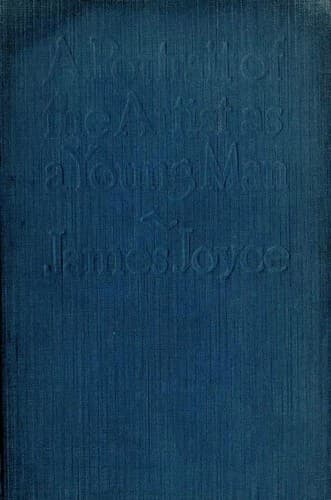
A Portrait of the Artist as a Young ManJoyce, James
General
A Portrait of the Artist as a Young Man
Joyce, James
Artists -- Fiction; Autobiographical fiction; Bildungsromans; Dublin (Ireland) -- Fiction; Young men -- Fiction
He could still leave the chapel. He could stand up, put one foot before
the other and walk out softly and then run, run, run swiftly through
the dark streets. He could still escape from the shame. Had it been any
terrible crime but that one sin! Had it been murder! Little fiery
flakes fell and touched him at all points, shameful thoughts, shameful
words, shameful acts. Shame covered him wholly like fine glowing ashes
falling continually. To say it in words! His soul, stifling and
helpless, would cease to be.
The slide was shot back. A penitent emerged from the farther side of
the box. The near slide was drawn. A penitent entered where the other
penitent had come out. A soft whispering noise floated in vaporous
cloudlets out of the box. It was the woman: soft whispering cloudlets,
soft whispering vapour, whispering and vanishing.
He beat his breast with his fist humbly, secretly under cover of the
wooden armrest. He would be at one with others and with God. He would
love his neighbour. He would love God who had made and loved him. He
would kneel and pray with others and be happy. God would look down on
him and on them and would love them all.
It was easy to be good. God’s yoke was sweet and light. It was better
never to have sinned, to have remained always a child, for God loved
little children and suffered them to come to Him. It was a terrible and
a sad thing to sin. But God was merciful to poor sinners who were truly
sorry. How true that was! That was indeed goodness.
The slide was shot to suddenly. The penitent came out. He was next. He
stood up in terror and walked blindly into the box.
At last it had come. He knelt in the silent gloom and raised his eyes
to the white crucifix suspended above him. God could see that he was
sorry. He would tell all his sins. His confession would be long, long.
Everybody in the chapel would know then what a sinner he had been. Let
them know. It was true. But God had promised to forgive him if he was
sorry. He was sorry. He clasped his hands and raised them towards the
white form, praying with his darkened eyes, praying with all his
trembling body, swaying his head to and fro like a lost creature,
praying with whimpering lips.
—Sorry! Sorry! O sorry!
The slide clicked back and his heart bounded in his breast. The face of
an old priest was at the grating, averted from him, leaning upon a
hand. He made the sign of the cross and prayed of the priest to bless
him for he had sinned. Then, bowing his head, he repeated the
_Confiteor_ in fright. At the words _my most grievous fault_ he ceased,
breathless.
—How long is it since your last confession, my child?
—A long time, father.
—A month, my child?
—Longer, father.
—Three months, my child?
—Longer, father.
—Six months?
—Eight months, father.
He had begun. The priest asked:
—And what do you remember since that time?
He began to confess his sins: masses missed, prayers not said, lies.
—Anything else, my child?
Public-domain text, read in full here on John Shaqi.
Reviews
Reviews
No reviews yet
Be the first to share your thoughts on this work.
Elsewhere in the archive
Join the Discussion
Join the discussion
Sign in to leave a comment or review.
Sign InorCreate an account