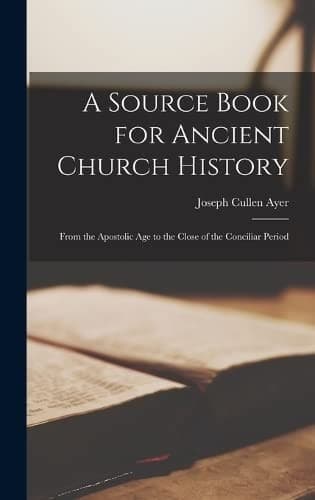
A Source Book for Ancient Church HistoryAyer, Joseph Cullen
History
A Source Book for Ancient Church History
Ayer, Joseph Cullen
Church history -- Primitive and early church, ca. 30-600 -- Sources
Ch. 9. The narrower the sphere of action of this, the second and only
remaining repentance, the more laborious is its probation; that it may not
be exhibited in the conscience alone, but may likewise be performed in
some act. This act, which is more usually expressed and commonly spoken of
under the Greek name, exomologesis, whereby we confess our sins to the
Lord, not indeed to Him as ignorant of them, but inasmuch as by confession
a satisfaction is made; of confession repentance is born; by repentance
God is appeased. And thus exomologesis is a discipline for man’s
prostration and humiliation, enjoining a demeanor calculated to move
mercy. With regard, also, to the very dress and food, it commands one to
lie in sackcloth and ashes, to cover the body as in mourning, to lay the
spirit low in sorrow, to exchange for severe treatment the sins which he
has committed; furthermore, to permit as food and drink only what is
plain—not for the stomach’s sake, but for the soul’s; for the most part,
however, to feed prayers on fastings, to groan, to weep, and make outcries
unto the Lord our God; to fall prostrate before the presbyters and to
kneel to God’s dear ones; to enjoin on all the brethren to be ambassadors
to bear his deprecatory supplication before God. All this exomologesis
does, that it may enhance repentance, that it may honor the Lord by fear
of danger, may, by itself, in pronouncing against the sinner stand in
place of God’s indignation, and by temporal mortification (I will not say
frustrate, but rather) expunge eternal punishments.
(_d_) Tertullian, _De Pudicitia_, 1, 21, 22. (MSL, 2:1032, 1078.)
Callistus, to whom reference is made in the first chapter, was
bishop of Rome 217 to 222. The work, therefore, belongs to the
latest period of Tertullian’s life.
Ch. 1. I hear that there has been an edict set forth, and, indeed, a
peremptory one; namely, that the Pontifex Maximus, the bishop of bishops,
issues an edict: “I remit to such as have performed penance, the sins both
of adultery and fornication.”
Ch. 21. “But,” you say, “the Church has the power of forgiving sins.” This
I acknowledge and adjudge more, I, who have the Paraclete himself in the
person of the new prophets, saying: “The Church has the power to forgive
sins, but I will not do it, lest they commit still others.”… I now inquire
into your opinion, to discover from what source you usurp this power to
the Church.
Public-domain text, read in full here on John Shaqi.
Reviews
Reviews
No reviews yet
Be the first to share your thoughts on this work.
Elsewhere in the archive
Join the Discussion
Join the discussion
Sign in to leave a comment or review.
Sign InorCreate an account