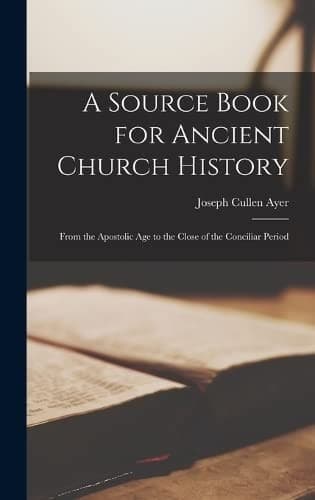
A Source Book for Ancient Church HistoryAyer, Joseph Cullen
History
A Source Book for Ancient Church History
Ayer, Joseph Cullen
Church history -- Primitive and early church, ca. 30-600 -- Sources
In the law of our fathers and forefathers, of which thou also art not
thyself ignorant, it is established, according to the divine and
ecclesiastical order (for it is all for the good pleasure of God and the
zealous regard for better things), that it has been determined and settled
by them that it is not lawful for any bishop to perform ordinations in
other parishes than his own. This law is exceedingly important and wisely
devised. For, in the first place, it is but right that the conversation
and life of those who are ordained should be examined with great care;
and, in the second place, that all confusion and turbulence should be done
away with. For every one shall have enough to do in managing his own
parish, and in finding, with great care and many anxieties, suitable
subordinates among those with whom he has passed his whole life, and who
have been trained under his hands. But thou, considering none of these
things, nor regarding the future, nor considering the law of our holy
Fathers and those who have put on Christ in long succession, nor the honor
of our great bishop and father, Peter,(89) on whom we all depend in the
hope which we have in the Lord Jesus Christ, nor softened by our
imprisonments and trials, and daily and multiplied reproaches, nor the
oppressions and distress of all, hast ventured on subverting all things at
once. And what means will be left for thee for justifying thyself with
respect to these things?
But perhaps thou wilt say, I did this to prevent many from being drawn
away with the unbelief of many, because the flocks were in need and
forsaken, there being no pastor with them. Well, but it is most certain
that they were in no such destitution; in the first place, because there
were many going among them and able to visit them; and, in the second
place, even it there were some things neglected by them, representation
should have come from the people, and we should have duly considered the
matter. But they knew that they were in no want of ministers, and
therefore they did not come to seek thee. They knew that either we were
wont to warn them from such complaint or there was done, with all
carefulness, what seemed profitable; for it was done under correction and
all was considered with well-approved honesty. Thou, however, giving such
careful attention to the deceits of certain men and their vain words,(90)
hast, as it were, stealthily leaped forward to the performance of
ordinations. For if, indeed, those accompanying thee constrained thee to
this and compelled thee and were ignorant of the ecclesiastical order,
thou oughtest to have followed the rule and have informed us by letter;
and in that way what seemed expedient would have been done. And if
perchance some persuaded thee to credit their story, who said to thee that
it was all over with us—a matter which could not have been unknown to
thee, because there were many passing and repassing by us who might visit
Public-domain text, read in full here on John Shaqi.
Reviews
Reviews
No reviews yet
Be the first to share your thoughts on this work.
Elsewhere in the archive
Join the Discussion
Join the discussion
Sign in to leave a comment or review.
Sign InorCreate an account