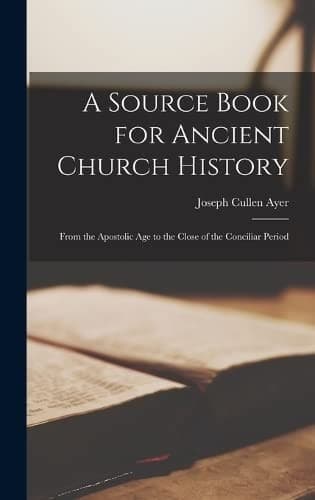
A Source Book for Ancient Church HistoryAyer, Joseph Cullen
History
A Source Book for Ancient Church History
Ayer, Joseph Cullen
Church history -- Primitive and early church, ca. 30-600 -- Sources
§ 4. If anything, therefore, has been done harshly in bringing about
unity,(106) you see, brother Parmenianus, to whom it ought to be
attributed. Do you say that the military was sought by us Catholics; if
so, then why did no one see the military in arms in the proconsular
province? Paulus and Macarius came, everywhere to consider the poor and to
exhort individuals to unity; and when they approached Bagaja, then another
Donatus, bishop of that city, desiring to place an obstacle in the way of
unity and hinder the work of those coming, whom we have mentioned, sent
messengers throughout the neighboring places and all markets, and summoned
the Circumcellions, calling them Agonistici, to come to the said place.
And at that time the gathering of these was desired, whose madness a
little before had been seen by the bishops themselves to have been
impiously inspired. For when men of this sort before the unity(107)
wandered through various places, when Axido and Fasir were called by the
same mad ones the leaders of the saints, no one could be secure in his
possessions; written evidences of indebtedness lost their force; no
creditor was at liberty at that time to demand anything. All were
terrified by the letters of those who boasted that they were the leaders
of the saints, and if there was any delay in fulfilling their commands,
suddenly a furious multitude hurried up and, terror going on before,
creditors were surrounded with a wall of dangers, so that those who ought
to have been asked for their protection were by fear of death compelled to
use humble prayers. Each one hastened to abandon his most important
duties; and profit was thought to have come from these outrages. Even the
roads were no longer at all safe, because masters, turned out of their
carriages, ran humbly before their slaves sitting in the places of their
masters. By the judgment and rule of these the order of rank between
masters and servants was changed. Therefore when there arose complaint
against the bishops of your party, they are said to have written to Count
Taurinus, that such men could not be corrected in the Church, and they
demanded that they should receive discipline from the said count. Then
Taurinus, in response to their letters, commanded an armed body of
soldiers to go through the markets where the Circumcellions were
accustomed to wander. In Octavum very many were killed, many were beheaded
and their bodies, even to the present day, can be counted by the white
altars or tables.(108) When first some of their number were buried in the
basilicas, Clarus, a presbyter in Subbulum, was compelled by his bishop to
disinter those buried. Whence it is reported that what was done had been
commanded to be done, when it is admitted that sepulture in the house of
God is not granted. Afterward the multitude of these people increased. In
this way Donatus of Bagaja found whence he might lead against Macarius a
raging mob. Of that sort were those who were to their own ruin murderers
Public-domain text, read in full here on John Shaqi.
Reviews
Reviews
No reviews yet
Be the first to share your thoughts on this work.
Elsewhere in the archive
Join the Discussion
Join the discussion
Sign in to leave a comment or review.
Sign InorCreate an account