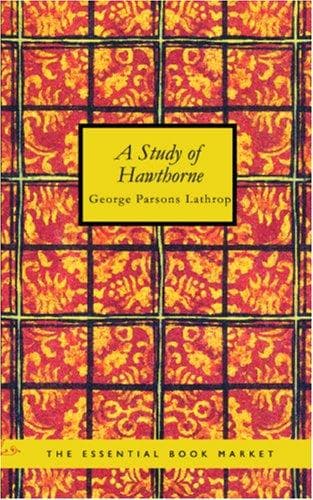
Hawthorne, Nathaniel, 1804-1864; Novelists, American -- 19th century -- Biography
"The lady's frailty, [writes the reviewer,] is philosophized into a
natural and necessary result of the Scriptural law of marriage, which by
holding her irrevocably to her vows, as plighted to a dried-up old
book-worm, ... is viewed as making her heart an easy victim.... The sin
of her seducer, too, seems to be considered as lying, not so much in the
deed itself, as in his long concealment of it; and in fact the whole
moral of the tale is given in the words, 'Be true, he true!' as if
sincerity in sin were a virtue, and as if 'Be clean, he clean!' were not
the more fitting conclusion."
But this moral of cleanliness was one so obvious that Hawthorne probably
never dreamed of any one's requiring it to be emphasized. In fact, it is
the starting-point, the very foundation, of the tragedy. The tale is a
massive argument for repentance, which is the flinging aside of
concealment, and the open and truthful acknowledgment of sin. In the
Puritan mode of dealing with sin, Hawthorne found the whole problem of
repentance and confession presented in the most drastic, concentrated,
and startling form; for the Puritans carried out in the severest style a
practical illustration of the consequences of moral offence. Since men
and women would not voluntarily continue in active remorse and public
admission of wrong-doing, these governors and priests determined to try
the effect of visible symbols in keeping the conscience alive. People
were set before the public gaze, in the stocks, whipped in public at the
whipping-post, and imprisoned in the pillory. Malefactors had their ears
cropped; scolding women had to wear a forked twig on the tongue; other
criminals to carry a halter constantly around the neck. But that this
was only a hellish device, after all; that the inflictors of such
punishment were arrogating too much to themselves, and shared the office
of the fiend; that, moreover, this compulsion of a dumb outward
truthfulness would never build up the real inner truth of the soul;--all
this Hawthorne perceived and endeavored to portray in a form which
should be as a parable, applying its morality to the men and women of
to-day, all the more persuasively because of its indirectness. As a
study of a system of social discipline never before so expounded, it
claimed the deepest attention. And never was the capacity of sinning men
and women for self-delusion more wonderfully illustrated than in this
romance. The only avenue of escape from such delusion was shown to be
self-analysis; that is, the conscientious view of one's self which keeps
the right or wrong of one's conduct always clearly visible. Hester was
on the whole the truest of the three persons in the drama, and the
advantages of this comparative trueness are constantly made manifest.
She in a measure conquers evil and partly atones for her wrong, by the
good which she is able to do among her fellow-beings,--as much
compensation as can rightfully be hoped for a woman who has once been so
Public-domain text, read in full here on John Shaqi.
Reviews
Reviews
No reviews yet
Be the first to share your thoughts on this work.
Elsewhere in the archive
Join the Discussion
Join the discussion
Sign in to leave a comment or review.
Sign InorCreate an account