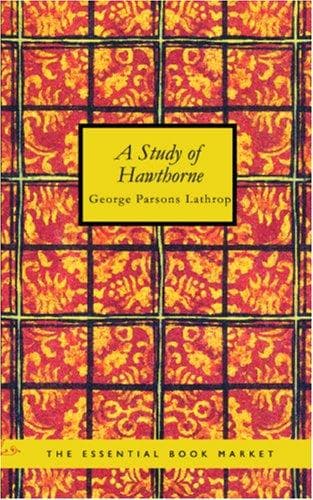
Hawthorne, Nathaniel, 1804-1864; Novelists, American -- 19th century -- Biography
MY DEAR SIR:--There are no Mosses on our "Old Manse," there is no
Romance at our Blithedale; and this is no "Scarlet Letter." But you can
give us a "Twice-Told Tale," if you will for the second time be our
guest to-morrow at dinner, at half past two o'clock.
Very truly yours,
CHARLES BURROUGHS.
But, at present, Hawthorne's decision led him to Berkshire.
VIII.
LENOX AND CONCORD: PRODUCTIVE PERIOD.
1850-1853.
In the early summer, after the publication of "The Scarlet Letter,"
Hawthorne removed from Salem to Lenox, in Berkshire, where himself and
his family were ensconced in a small red house near the Stockbridge
Bowl. It was far from a comfortable residence; but he had no means of
obtaining a better one. Meantime, he could do what he was sent into the
world to do, so long as he had the mere wherewithal to live.
He was much interested in Herman Melville, at this time living in
Pittsfield. There was even talk of their writing something together, as
I judge from some correspondence; though this was abandoned.
Between this summer of 1850 and June, 1853, Hawthorne wrote "The House
of the Seven Gables," "The Blithedale Romance," "The Wonder-Book for
Boys and Girls," and "Tanglewood Tales," besides the story of "The Snow
Image" in the volume to which this supplies the title; and his short
"Life of Franklin Pierce." The previous paucity of encouragements to
literature, and the deterring effect of official duties and of the Brook
Farm attempt, were now removed, and his pen showed that it could pour a
full current if only left free to do so.
The industry and energy of this period are the more remarkable because
he could seldom accomplish anything in the way of composition during the
warm months. "The House of the Seven Gables" was under way by September,
1850.
"I shan't have the new story ready," he writes to his publisher on the
1st of October, "by November, for I am never good for anything in the
literary way till after the first autumnal frost, which has somewhat
such an effect on my imagination that it does on the foliage here about
me,--multiplying and brightening its hues; though they are likely to be
sober and shabby enough after all."
The strain of reflection upon the work in hand which he indulged one
month later is so important as to merit dwelling upon.
Public-domain text, read in full here on John Shaqi.
Reviews
Reviews
No reviews yet
Be the first to share your thoughts on this work.
Elsewhere in the archive
Join the Discussion
Join the discussion
Sign in to leave a comment or review.
Sign InorCreate an account