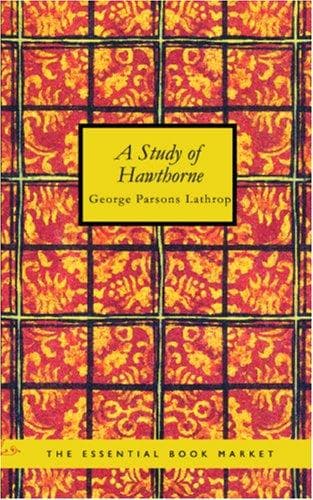
Hawthorne, Nathaniel, 1804-1864; Novelists, American -- 19th century -- Biography
Browning and I used to discuss his personages
like living people, and regarded his death as a great personal calamity
to both.
I am expecting Mrs. Browning here in a few days, not being well enough
to meet her in London.... How I wish, dear Mr. Hawthorne, that you were
here to meet them! The day will come, I hope. It would be good for your
books to look at Europe, and all of Europe that knows our tongue would
rejoice to look at you.
Ever your obliged and affectionate friend,
M. R. MITFORD.
I must transcribe here, too, part of a letter from Herman Melville, who,
in the midst of his epistle, suddenly assumes the tone of a reviewer,
and discourses as follows, under the heading, "_The House of the Seven
Gables: A Romance. By Nathaniel Hawthorne_. 16_mo. pp._ 344."
"The contents of this book do not belie its clustering romantic title.
With great enjoyment we spent almost an hour in each separate gable.
This book is like a fine old chamber, abundantly but still judiciously
furnished with precisely that sort of furniture best fitted to furnish
it. There are rich hangings, whereon are braided scenes from tragedies.
There is old china with rare devices, set about on the carved beaufet;
there are long and indolent lounges to throw yourself upon; there is an
admirable sideboard, plentifully stored with good viands; there is a
smell of old wine in the pantry; and finally, in one corner, there is a
dark little black-letter volume in golden clasps, entitled _Hawthorne:
A Problem_....
"We think the book for pleasantness of running interest surpasses the
other work of the author. The curtains are now drawn; the sun comes in
more; genialities peep out more. Were we to particularize what has most
struck us in the deeper passages, we should point out the scene where
Clifford, for a minute, would fain throw himself from the window, to
join the procession; or the scene where the Judge is left seated in his
ancestral chair.
"Clifford is full of an awful truth throughout. He is conceived in the
finest, truest spirit. He is no caricature. He is Clifford. And here we
would say, that did the circumstances permit, we should like nothing
better than to devote an elaborate and careful paper to the full
consideration and analysis of the purpose and significance of what so
strongly characterizes all of this author's writing. There is a certain
tragic phase of humanity, which, in our opinion, was never more
powerfully embodied than by Hawthorne: we mean the tragicalness of human
thought in its own unbiased, native, and profound workings. We think
that into no recorded mind has the intense feeling of the whole truth
ever entered more deeply than into this man's. By whole truth, we mean
the apprehension of the absolute condition of present things as they
strike the eye of the man who fears them not, though they do their worst
to him."
Public-domain text, read in full here on John Shaqi.
Reviews
Reviews
No reviews yet
Be the first to share your thoughts on this work.
Elsewhere in the archive
Join the Discussion
Join the discussion
Sign in to leave a comment or review.
Sign InorCreate an account