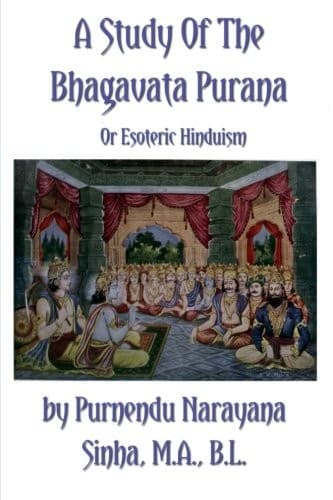
A Study of the Bhâgavata Purâna; or, Esoteric Hinduism
Religion
A Study of the Bhâgavata Purâna; or, Esoteric Hinduism
Puranas. Bhagavatapurana. English
The Poison only opens the door for Amrita, the spiritual nectar. The
famous Purusha Sukta says: — "He placed Amrita or eternal bliss in the
higher three Lokas." The Bhâgavata renders this famous saying into the
eighteenth sloka of the 6th. chapter of the Second Skandha. Commenting
on this sloka, Śridhara says, bliss in our Trilokî is only transitory
and the dwellers of Mahar Loka have also to leave their abode for the
higher Jana Loka, when they are oppressed by the fire of Kâlpic
dissolution. Amrita was secured to the higher Lokas, as there is no
selfishness in them. (III. 10-9.) Could the Asuras, the gods of
selfishness, aspire to have life immortal and unlimited bliss. Vishnu
decided otherwise.
The way was thus prepared for the Vaivasvata Manvantara, when men
learned to discern between right and wrong.
THE SEVENTH MANVANTARA.
*SKANDHA VIII. CHAP. 13.*
Srâddha Deva son of Vivasvat or Sûrya is the seventh Manu. He is
reigning at present. Ikshvâku, Nabhaga, Dhrishta, Saryâti, Narishyanta,
Nâbhâga, Dishta, Tarusha, Prishadhra, and Vasumat are his ten sons.
The Âdityas, the Vasus, the Rudras, the Visvadevas, the Maruts, the
Asvini-kumaras and the Ribhus are the Devas. Purandara is their Indra.
Kâsyapa, Atri, Vasistha, Visvâmitra, Goutama, Jamadagni and Bharadvâja
are the seven Rishis.
The Avatâra of this Manvantara is Vâmana, the youngest son of Aditi by
Kâsyapa.
(The Purâna will revert to this Manvantara after giving a general
account of the succeeding Manvantaras).
THE EIGHTH MANVANTARA.
*SKANDHA VIII. CHAP. 13.*
Sâvarni is the son of Vivasvat by his wife Châyâ. He shall be the eighth
Manu — Nirmoka, Virajaska (without Rajas) and others shall be his sons.
Sutapas, Viraja (without Rajas) and Amrita Prabha shall be the Devas.
Bali, son of Virochana, shall be the Indra.
Gâlava, Diptimân, Parasurâma, Asvatthâma, Kripa, Rishya Sringa and Vyâsa
shall be the seven Rishis.
Sârvabhouma, son of Devaguhya by Sarasvati, shall be the Avatâra. He
shall wrest the kingdom of Svarga Loka from Purandara and make it over
to Bali.
(The eighth Manvantara is the Second half of the Fourth Round and should
be the spiritual half according to Theosophical ideas. But we find the
Asura King Bali, who was removed from the kingdom of Trilokî in the
Vaivasvat Manvantara, restored to the kingdom of Svarga).
Amongst the Rishis we find Parasurâma who fought with Râma and
Asvatthâma and Kripa who ranged themselves against the Pândava brothers
in the battle of Kurukshetra.
All this shews that spirituality was developed out of materiality. The
sons of Manu are Nirmoka and Virajaska. _Moka_ is the cast off skin of
an animal and may well represent the sthûla body. Nirmoka is one without
Moka.
Virajaska is without Rajas. So the course of evolution shews a tendency
in the first place to cast off the sthûla body and to overcome the
Rajas.
THE NINTH MANVANTARA.
*SKANDHA VIII. CHAP. 13.*
Public-domain text, read in full here on John Shaqi.
Reviews
Reviews
No reviews yet
Be the first to share your thoughts on this work.
Elsewhere in the archive
Join the Discussion
Join the discussion
Sign in to leave a comment or review.
Sign InorCreate an account