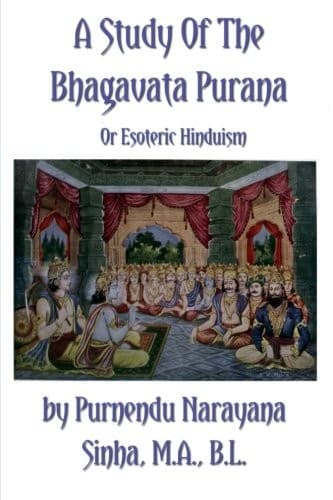
A Study of the Bhâgavata Purâna; or, Esoteric Hinduism
Religion
A Study of the Bhâgavata Purâna; or, Esoteric Hinduism
Puranas. Bhagavatapurana. English
Bhadra Vana (From Bhadra, a kind of tree).
Bhândira Vana (From Bhândira, the name of a religious fig tree).
Srî Vana (From Srî or Lakshmî).
Loha-vana (from Loha, the name of an Asura.)
And Vrindâvana (from Vrinda or Tulasi plant.)
These twelve forests are presided over by the 12 Âdityas, 11 Rudras,
eight Vasus, seven Rishis, Brahmâ, Nârada, the five Vinâyakas (Moda,
Pramoda, Âmoda, Sumukha and Durmukha), Viresvara, Rudresvara,
Visvesvara, Gopalesvara, Bhadresvara, and 24 other Śiva Lingas.
There are two chief forests, Krishnavana and Bhadra vana. The 12 forests
are included in these. They are all sacred, some of them most sacred.
There are four forms of Vishnu (Mûrtis) in these forests, Râma
(Sankarshana), Pradyumna, Aniruddha and Krishna (Vâsudeva).
There are twelve other Mûrtis in Mathurâ:
_Roudrî_ adored by the Rudras.
_Brâhmi_, by Brahmâ.
_Devî_, by the sons of Brahmâ.
_Mânavî_, by the Maruts.
_Vighna nâsinî_, by the Yinayakas.
_Kâmyâ_, by the Vasus.
_Ârshî_, by the Rishis.
_Gândharvi_, by the Gandharvas.
_Gō_, by the Apsarasas.
_Antardhânasthâ_ remains hidden.
_Svapadangatâ_ is at the supreme abode of Vishnu.
_Bhûmisithâ_ remains on the earth (Bhûmi).
Those who worship _Bhûmisthâ_ know no death, they become liberated.
Gopa is Jiva (Ego).
Gopâla = Gopa (Jiva) + âla (acceptor).
Gopâla is he who accepts the Jivas as his own.
He who realises "I am Gopâla" attains Moksha. Gopâla always remains at
Mathurâ. Mathurâ is the place for devotion.
The Lotus of the heart is Mathurâ with its eight petals. The two feet of
Nârâyana are there marked with the divine Symbols (flag, umbrella &c.).
The object of meditation there is either Krishna, with Srivatsa, with
Kaustubha, with four hands, bearing Sankha, Chakra, Padma, and Gadâ,
with arms adorned by Keyûra, with the neck adorned by a garland, with a
crown on the head and with Makara-shaped Kundalas on the ears; or it is
Krishna with, two hands, bearing a flute and horn.
Mathurâ is from _Math_, to put down, because materiality is put down
there by divine wisdom. The eight Dikpâlas (Indra, Agni, Vayu, Varuna
and others) preside over the eight petals of the Lotus in the heart.
The "flags" have the glow of the Sun and the Moon.
The umbrella is Brahmâ Loka.
The two feet are "above" and "below."
Kaustubha is that light which overpowers all other lights _viz._, Surya,
Agni, Vak and Chandra.
The "four hands" are Satva, Rajas, Tamas and Ahankâra.
"Sankha," consisting of the five Bhûtas, is held by the hand
representing Rajas.
"Chakra," consisting of Manas, is held by the hand representing Satva.
"Padma" is the universe, the primal Mâyâ. It is held by the hand,
representing Tamas.
"Gadâ" is primal Vidya or wisdom. It is held by the hand, representing
Ahankâra.
"Garland" round the neck consists of the Mânasa Putras of Brahmâ. The
crown is Sat, absolute existence. The different life forms and the
underlying Jiva are the two "Kundalas" on the ear.
Public-domain text, read in full here on John Shaqi.
Reviews
Reviews
No reviews yet
Be the first to share your thoughts on this work.
Elsewhere in the archive
Join the Discussion
Join the discussion
Sign in to leave a comment or review.
Sign InorCreate an account