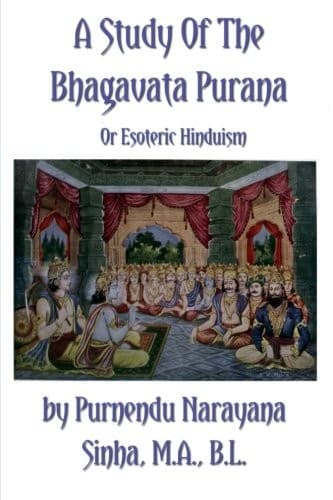
A Study of the Bhâgavata Purâna; or, Esoteric Hinduism
Religion
A Study of the Bhâgavata Purâna; or, Esoteric Hinduism
Puranas. Bhagavatapurana. English
Vibhu
m. Rati
|
Prithusena
m. Âkriti
|
Nakta
m. Riti
|
Gaya
m. Gâyanti
|
−−−−−+−−−−−−−−−−−−−−+−−−−−−−−−−−−−−−+−−−−−−−−−+−−−−−−−
| | |
Chitraratha Sugati Abhirodhana
m. Urvâ
|
Samrât
m. Utkalâ
|
Marichi
m. Vindumatî
|
Vindumat
m. Saraghâ
|
Madhu
m. Sumanas
|
Viravrata
m. Bhojâ
|
+−−−−+−−−−−−−−−−−−−−−−−−−−−−−−−−+
| |
Manthu Pramanthu
m. Satya
|
Bhauvava
|
Tvastri
m. Vitochanâ
|
Viraja
m. Vishûchi
|
+−−−−−−−−−−−−−−−−−−−−+
| |
100 sons 1 daughter
SKANDHA V.
TABLE V. PRIYAVRATA.
*SKANDHA V. CHAP. 1.*
Priyavrata was, from the beginning, under the influence of Nârada. So he
declined to take part in the rule of the universe; till at last Brahmâ
persuaded him not to shirk his assigned work. King Priyavrata married
Barhishmati, the daughter of Visvakarmâ. By her he had ten sons Agnidhra
&c., all names of Agni.
Of these ten, Kavi, Mahâvira and Savana were spiritually inclined and
they became Parama Hansas (Parama Hansa is one who gives up the world
entirely and becomes fixed in Brahmâ). Priyavrata had by another wife
three sons: Uttama, Tâmasa and Raivata. They all became Manus.
Priyavrata reigned for 400,000,000 years. The Sun-god Âditya moves round
the Sumeru Mount and sends his rays up to the Loka-loka range,
illumining half the regions while the other half remains dark. King
Priyavrata in the exuberance of spiritual power determined to illuminate
the dark regions and to make it all day and no night. He followed the
Sun-god seven times with a chariot as swift and bright as that of the
Sun-god himself even as though he were a second Âditya. Brahmâ appeared
saying "Desist, O Son, this is not thy assigned duty in the universe."
The ruts caused by the wheel of Priyavtata’s chariot are the seven
oceans, which gave rise to the seven Dvipas — Jambu, Plaksha, Sâlmali,
Kusa Krauncha, Śâka and Pushkara.
Of these Dvipas, each succeeding one is twice as large as the one
preceding it. The seven oceans respectively consist of:
Public-domain text, read in full here on John Shaqi.
Reviews
Reviews
No reviews yet
Be the first to share your thoughts on this work.
Elsewhere in the archive
Join the Discussion
Join the discussion
Sign in to leave a comment or review.
Sign InorCreate an account