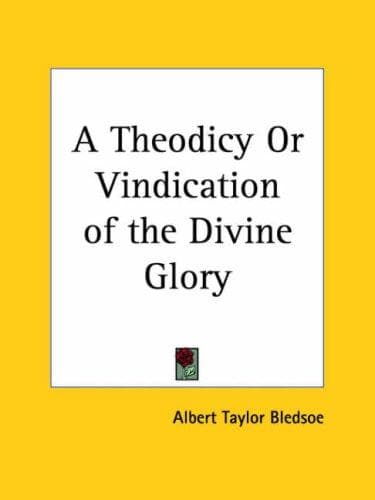
A Theodicy, or, Vindication of the Divine GloryBledsoe, Albert Taylor
Religion
A Theodicy, or, Vindication of the Divine Glory
Bledsoe, Albert Taylor
Theodicy
Far different is the case with respect to moral necessity. This acts
directly upon the will itself, and absolutely controls all its movements.
Within its own sphere it is conceded to be “as absolute as natural
necessity,”(99) and “as sure as fatalism.”(100) It absolutely and
unconditionally determines the will at all times, and in all cases. Yet we
are told that we are accountable for all the acts thus produced in us,
because they are the acts of our own wills! Nothing is done against our
wills, as in the case of natural necessity; (they should rather say,
against the external effects of our wills;) but our wills always follow,
and we are accountable therefor, though they cannot but follow. Moral
necessity is not irresistible, because this implies resistance, and our
wills never resist that which makes us willing. It is only invincible; and
invincible it is indeed, since with the mighty, sovereign power of the
Almighty it controls all the thoughts, and feelings, and volitions of the
human mind. Now we see this scheme as it is in itself, in all its
nakedness, just as it is presented to us by its own most able and
enlightened defenders. And seeing it thus removed from all contact with
the scheme of natural necessity, we ask, whether agents can be justly held
accountable for acts thus determined and controlled by the power of God,
or by those invincible causes which his omnipotence marshalleth?
We speak not of external acts; and hence we lay aside the whole scheme of
natural necessity. We speak of the acts of the will; and we ask, if these
be not free from the dominion of moral necessity, from necessitating
causes over which we have no control, can we be accountable for them? Can
we be to praise or to blame for them? Can they be our virtue or our vice?
These questions, we think, we may safely submit to the impartial decision
of every unbiassed mind. And to such minds we shall leave it to determine,
whether the scheme of moral necessity has owed its hold upon the reason of
man to a dark confusion of words and things, or whether its glory has been
obscured by the misconception of its opponents?
Public-domain text, read in full here on John Shaqi.
Reviews
Reviews
No reviews yet
Be the first to share your thoughts on this work.
Elsewhere in the archive
Join the Discussion
Join the discussion
Sign in to leave a comment or review.
Sign InorCreate an account