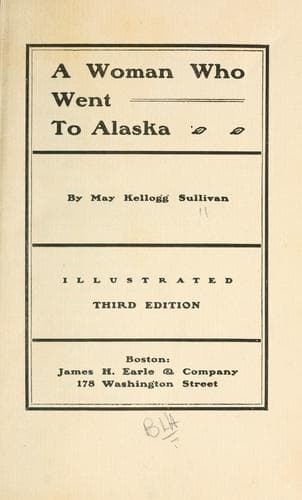
Alaska -- Description and travel; Frontier and pioneer life -- Alaska
Later: The captain returned from Nome, having made the trip of
eighty-five miles and back by dog-team in four days and nights, a very
quick trip indeed. The "toughs" have subsided, and are on their good
behavior for the present, at least, fearing what the captain will say
and do when their last doings are reported, but I understand that most
of them are mortally offended at my remaining at grandmother's, as no
one takes offense so easily as a rogue when his honesty is doubted.
CHAPTER XXV.
STONES AND DYNAMITE.
The last week of May has finally come, and with it real spring weather.
The children play out in the sand heap on the south side of the house
for hours together, enjoying the warm sunshine and pleasant air, the
little girl clothed from head to foot in furs. Never has a springtime
been so welcome to me, perhaps because in striking contrast to the long,
cold winter through which we have just passed. From the hillside behind
the Mission, the snow is slowly disappearing, first from the most
exposed spots and rocks, the gullies keeping their drifts and ice
longer. Mosses are everywhere peeping cheerfully up at me in all their
tints of gorgeous green, some that I found recently being tipped with
the daintiest of little red cups. This, with other treasures, I brought
in my basket to Jennie when I returned from my daily walk upon the hill,
and together we studied them closely under the magnifying glass.
To examine the treasures brought in by Mollie, however, we needed no
glass. They are sand-pipers, ptarmigan, squirrels, and occasionally a
wild goose, shot, perhaps, in the act of flying over the hunter's head,
as these birds are now often seen and heard going north. In the evening
I see from my window the neighboring Eskimo children playing with their
sleds, and sometimes they light a bonfire, shouting and chattering in
their own unique way. All "mushers" now travel at night when the trail
is frozen, as it is too soft in the daytime, and the glare of the sun
often causes snow-blindness. Then, too, there is water on the ice in
places, which we are glad to see, and pools of the same are standing
around the Mission and schoolhouse. I can no longer go out in my
muckluks, but must wear my long rubber boots and short skirts.
Today I went out for an hour, walking to Chinik Creek over the tundra,
from which the snow has almost disappeared, and returned by the hill-top
path. The tundra was beautiful with mosses, birds were singing, and the
rushing and roaring of the creek waters fairly made my head swim, they
were such unusual sounds. The water was cutting a channel in the sands
where it empties into the bay. Here it was flowing over the ice, helping
to loosen the edge and allow it to drift out to sea.
There is little change in the manners and dispositions of the rough men
in camp. There are the same things with which to contend day after day,
the same annoyances and trials to endure, with new ones in addition
quite frequently.
Public-domain text, read in full here on John Shaqi.
Reviews
Reviews
No reviews yet
Be the first to share your thoughts on this work.
Elsewhere in the archive
Join the Discussion
Join the discussion
Sign in to leave a comment or review.
Sign InorCreate an account