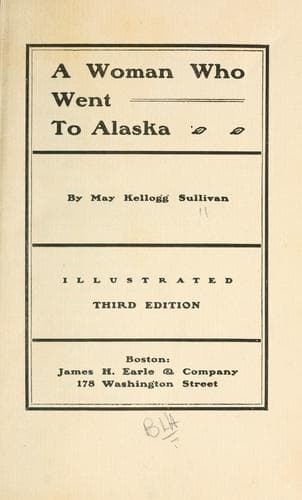
Alaska -- Description and travel; Frontier and pioneer life -- Alaska
But this day's climax was the three o'clock dinner, prepared by Miss E.
Could anything be more restful to three tired restaurant workers than to
sit quietly in easy chairs, allow others to prepare the meal and invite
them to partake, without having given a thought to the preparation of
the same, gaining, as we did, a knowledge of what was coming only by the
pleasant odors proceeding from the kitchen? Certainly not, and the
increased appetite that comes with this rest is only a part of the
enjoyment. So when we were seated at the table on Sunday, the second day
of our arrival at Golovin, before us fresh roast mutton, baked potatoes,
stewed tomatoes, coffee, bread and butter, with pickles, and a most
delicious soup made of dried prunes, apricots, raisins and tapioca for
dessert, we were about the happiest people in Alaska and appreciated it
immensely. What bread Miss E. did make, with slices as large as saucers,
not too thin, snowy, but fresh and sweet. What coffee from the big pot,
with Eagle brand cream from the pint can having two small holes in the
top, one to admit air and the other to let the cream out. Nothing had
tasted so good to us since we had come home, as hungry children, from
school. As then, we were care-free, if only for a little while, and we
were a jolly, happy crowd.
In the evening, when the children were once in bed, we all gathered in
the sitting-room for music, stories and plans for the future, including
the placing of a few new strings on the musical instruments and tuning
of the same. Mr. H. had gone to the Home the afternoon before, so there
had been no preaching service as ordinarily in the little schoolhouse
across the road. The boys were talking of going to the Home across the
bay next day in a boat, but a wind came up which finally developed into
a stout southwester, and Monday was a most disagreeable day. Alma worked
on a fur cap, to practise, she said, on some one before making her own.
Ricka mended mittens and other garments for the boys, while I sewed on
night clothes for the little Eskimo baby.
The child was probably between three and four years old, but nobody knew
exactly, for she was picked up on the beach, half dead, a year before,
by the missionary, where she was dying of neglect. Her mother was dead,
and her grandfather was giving her the least attention possible, so that
she was sickly, dirty and starved. She had well repaid the kind people
who took her into the Mission, being now fat and healthy, as well as
quite intelligent. She was a real pet with all the women immediately,
being the youngest of this brood of twenty youngsters and having many
cunning little ways. In appearance she looked like a Japanese, as, in
fact, all Eskimos do, having straight black hair, and eyes shaped much
like those of these people, while all are short and thick of stature,
with few exceptions.
Public-domain text, read in full here on John Shaqi.
Reviews
Reviews
No reviews yet
Be the first to share your thoughts on this work.
Elsewhere in the archive
Join the Discussion
Join the discussion
Sign in to leave a comment or review.
Sign InorCreate an account